Leave Your Message

China Top Heat Transfer Printer Paper Suppliers for Global Buyers

China has become an important sourcing base for buyers comparing Heat Transfer Printer Paper, but supplier claims deserve careful checking. Paper that looks similar in a product photo may behave differently under heat. Coating, weight, ink compatibility, printer settings, and fabric all affect the result. A sample is not a formality. It is a practical test.

A useful process-focused principle, paraphrased here rather than presented as a verified direct quotation, is associated with digital textile printing specialist Hitoshi Ujiie: “Match the paper, ink, fabric, and press before judging print quality.” That distinction matters. Buyers should ask suppliers for technical data, recommended temperature and dwell time, supported ink systems, and guidance on hot or cold peeling. Then test the paper on their own equipment. Small differences count.

This guide examines Chinese suppliers through the details that shape a dependable purchase: product range, customization, sample support, communication, packaging, and export experience. It does not assume that the largest catalog means the best fit. Nor is a low quote proof of poor quality. Some specifications may remain unclear until a trial run, and that is worth admitting. Compare like with like, record transfer results, and confirm the final specification in writing. A careful check can prevent wasted rolls, reprints, and avoidable delays.
China Top Heat Transfer Printer Paper Suppliers for Global Buyers

Understanding Heat Transfer Printer Paper and Its Main Applications

Heat transfer printer paper carries an image from a printer onto fabric or another prepared surface using heat and pressure. The paper is not the decoration itself; ink, coating, substrate, temperature, and pressing time all affect the result.

Small detail. Real impact.

For polyester garments, flags, and soft signage, sublimation paper transfers dye into the fibers, producing a smooth hand feel. Inkjet transfer papers for cotton or blended fabrics instead leave a thin image layer on the surface. Check the paper’s intended printer, fabric color, and fiber content before production. A vivid test on white polyester may look quite different on a dark cotton shirt.

Applications are broadening as printed textiles expand. Grand View Research estimated the global digital textile printing market at US$2.7 billion in 2023, with projected growth through 2030. Textile Exchange reported that global fiber production reached 124 million tonnes in 2023. These figures describe related markets, not heat-transfer paper sales, so they should not be treated as direct demand forecasts. In practice, short-run apparel, custom sportswear, home décor, and promotional items benefit from quick design changes, though transfer-paper waste and rejected prints still deserve attention. One overlooked variable is humidity: paper stored in a damp workshop can curl, feed unevenly, or weaken image consistency.


Types, Specifications, and Quality Standards of Transfer Paper

Heat-transfer papers differ by coating and process. Sublimation paper carries disperse dye onto polyester; coated transfer paper for light or dark fabrics uses a different transfer layer. Check the intended fabric and press conditions before comparing products. A paper that works on a pale polyester shirt may fail on cotton. Details matter.

Compare grammage, thickness, coating uniformity, moisture stability, release, and roll-width tolerance. For many sublimation applications, buyers commonly assess papers around 90–120 g/m²; this is a screening range, not a universal specification. Measure grammage under ISO 536 and thickness under ISO 534, then compare test results across suppliers. ISO 2470-1 provides a method for measuring brightness, but higher brightness alone does not guarantee vivid transfers. Ask for batch-level data, test methods, and sample rolls. Small differences can show.

Quality checks should include ink drying, edge curl, dust, and transfer residue. Trial prints reveal problems a datasheet can miss. Some specifications remain incomplete, even from experienced mills. Treat that as a reason to verify, not assume. Keep press temperature, dwell time, and pressure consistent during trials, and record wash-test results against the fabric’s care conditions.

China Top Heat Transfer Printer Paper Suppliers for Global Buyers - Types, Specifications, and Quality Standards of Transfer Paper

Transfer Paper Type Construction and Typical Specifications Suitable Applications Key Quality Checks Relevant Standards and Test Methods
Dye-sublimation transfer paper Coated paper designed to control ink absorption and release. Common commercial basis weights are approximately 30–120 g/m²; coating and weight vary by intended print speed and transfer process. Polyester fabrics and suitably polymer-coated hard substrates; compatible sublimation ink and equipment are required. Ink drying, coating uniformity, sheet flatness, image definition, transfer release, and color consistency. ISO 536 for grammage; ISO 534 for thickness; ISO 287 for moisture content. Transfer performance is generally assessed using application-specific procedures.
Inkjet transfer paper for light-colored textiles Inkjet-receptive coated sheet, commonly around 100–160 g/m². Some products require a mirrored image; follow the product instructions. Light-colored cotton or compatible fabric blends, subject to the transfer paper’s stated material limitations. Ink absorption, image sharpness, coating integrity, transfer completeness, hand feel, and wash durability under the stated care conditions. ISO 536 and ISO 534 may be used for paper grammage and thickness. Wash and rub performance should be tested using a defined, application-specific protocol.
Inkjet transfer paper for dark-colored textiles Typically includes an opaque transfer layer and an ink-receptive surface; commercial products are often approximately 120–200 g/m². Construction and cutting or peeling requirements vary. Dark or colored compatible textiles where an opaque layer is needed to show the printed image. Opacity, edge definition, adhesion, resistance to cracking, transfer coverage, and wash durability. ISO 536 and ISO 534 can characterize base-sheet properties. Adhesion and durability acceptance criteria should be agreed for the intended fabric and care conditions.
Laser transfer paper for light-colored textiles Coated paper engineered for specified laser printer and toner conditions; many products fall around 90–160 g/m². Printer, fuser, and media compatibility must be confirmed. Light-colored compatible fabrics and workflows using supported laser printing equipment. Reliable printer feeding, coating stability through the fuser, toner anchorage, image transfer, and clean release. ISO 536 for grammage and ISO 534 for thickness. Printer-feed and fuser suitability should be verified on the specified equipment.
Laser transfer paper for dark-colored textiles Usually combines a toner-compatible printable surface with an opaque transfer layer; many commercial products are approximately 120–200 g/m². Actual limits depend on the product and printer. Dark or colored compatible fabrics where print visibility requires an opaque layer. Opaque-layer coverage, toner adhesion, fuser compatibility, transfer adhesion, edge quality, and resistance to cracking or washing. ISO 536 and ISO 534 may be used for paper-property measurements. Equipment compatibility and end-use durability require product-specific verification.
General paper-property checks Specifications should state basis weight, thickness, moisture condition, sheet or roll dimensions, and permitted tolerances. Useful for comparing lots and confirming consistency before printing and transfer. Check dimensional consistency, curl, surface defects, coating uniformity, packaging condition, and batch traceability. ISO 536: grammage; ISO 534: thickness and apparent density; ISO 287: moisture content; ISO 2470-1: blue-light diffuse reflectance factor (brightness) where relevant.

Note: Specification ranges are indicative examples of common commercial offerings, not universal limits. The listed ISO methods measure paper properties; they do not by themselves certify transfer performance or set product acceptance criteria. Confirm printer compatibility, transfer settings, fabric suitability, and care instructions with the specific product documentation.

Profiles of Leading Chinese Heat Transfer Paper Suppliers

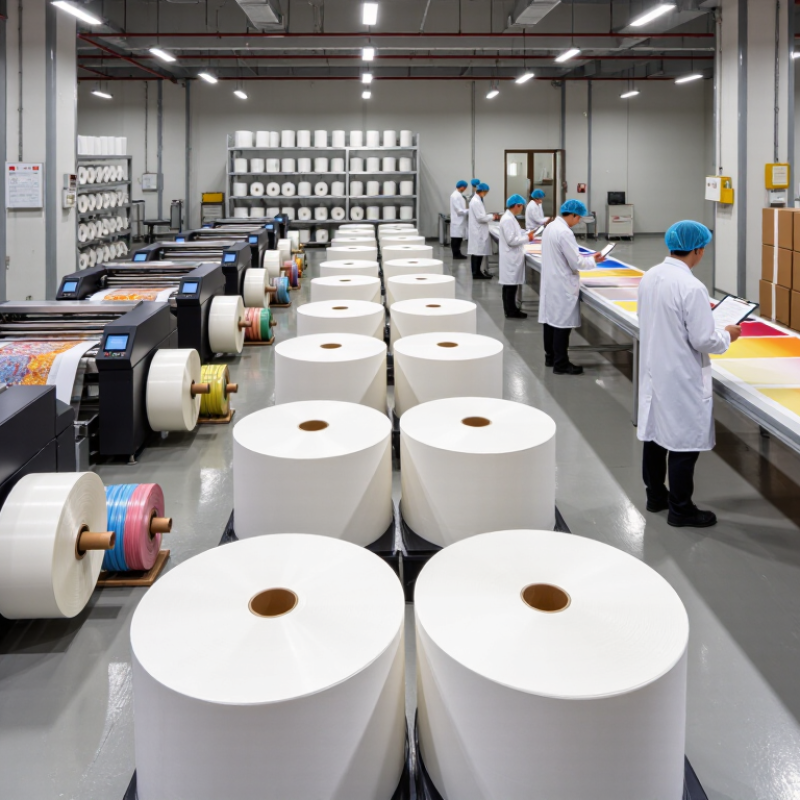
Leading Chinese heat transfer paper suppliers often differ less by catalog size than by process control. A mature mill should explain coating weight, paper moisture, release behavior, and lot-to-lot variation in plain terms. Ask for sample rolls, technical data sheets, and test results using your ink, press temperature, and fabric. Details matter. Some suppliers specialize in fast-drying sheets for small-format printing; others focus on wide rolls for production lines. A useful profile identifies equipment, capacity ranges, export experience, and each grade’s limitations, rather than repeating broad claims.

Reliable exporters typically document packaging, core sizes, humidity protection, and lead times before confirming an order. Buyers can compare transfer sharpness, edge definition, color release, and residue after washing, while keeping settings consistent. Request a small trial and record results across several batches. One test is not enough. Supplier communication also reveals experience: a technically strong team asks about printer type, ink, fabric blend, and workflow. Still, paperwork cannot replace production checks, and a polished sample may not represent every shipment. That is worth admitting. Profiles should distinguish verified specifications from estimates and explain how defects or complaints are handled.

How Global Buyers Can Evaluate and Select Suppliers

Global buyers evaluating heat transfer printer paper suppliers should compare measurable performance, not polished sales language. Request sample rolls and test them on your own printer, ink, and transfer equipment. Check coating uniformity, print sharpness, drying time, and transfer results across light and dark fabrics. A small test matters.

Ask suppliers for specifications, including paper width, roll length, basis weight, and recommended storage conditions. Confirm how they control batch consistency and protect rolls from moisture during packing and shipping. Request relevant quality documents, then verify that their scope matches the product you are buying. A certificate alone does not prove every shipment will perform consistently.

Tips: Record the printer settings, fabric type, and transfer conditions used for each sample. Compare results side by side, and keep one sample for later reference. Ask about minimum order quantities, production lead times, and how defects are handled. Clear answers are useful; vague promises deserve follow-up. Even a careful scorecard can miss real-world variation, so consider a trial order before committing to larger volumes.

Ordering, Export, and Logistics Considerations for International Buyers

International buyers should confirm paper specifications before requesting a freight quote. For heat transfer printing, compare paper weight, roll width, core diameter, coating compatibility, and moisture protection. Ask for tolerances in writing, then test a production sample on the intended printer and transfer process. Small differences matter. A narrow roll can disrupt an otherwise efficient packing plan.

Packaging and shipping terms need equal attention. Request roll-level labels, edge protection, sealed moisture barriers, and pallet dimensions before booking cargo. UNCTAD’s Review of Maritime Transport 2024 notes that more than 80% of global trade by volume moves by sea, making port schedules and container availability important planning factors. Confirm the agreed Incoterm, shipment date, insurance responsibilities, and who prepares export documents. Details matter.

Use the World Bank’s Logistics Performance Index 2023 as one reference when comparing destination-country logistics. It assesses customs, infrastructure, international shipments, logistics competence, tracking, and timeliness. It is a country-level benchmark, not a guarantee of any supplier’s performance. Check recent shipment records and request document drafts early, including the commercial invoice, packing list, and bill of lading. I would still allow schedule buffer: paper specifications cannot predict every humid port, inspection delay, or missed connection.