Choosing the right Office Paper supplier requires more than comparing prices on a spreadsheet. Global buyers must examine mill capacity, fibre sourcing, certification, moisture control, and delivery reliability. A carton may look identical in a sample room, yet perform differently after weeks inside a humid warehouse.
FAO’s Global Forest Products Facts and Figures reports that worldwide paper and paperboard production exceeded 400 million tonnes in 2022. This scale shows the industry’s depth, but it also hides major differences among suppliers. Smithers’ The Future of Global Printing to 2028 highlights continuing digitalisation, cost pressure, and sustainability demands across paper markets. Those forces affect office-grade copy paper directly.
Phil Riebel, president of Two Sides North America, has stated, “Paper is a renewable, recyclable resource.” Buyers should still test every claim. Request FSC or PEFC documentation, confirm grammage tolerance, and inspect pallet wrapping before signing a large contract. Check whether “whiteness” refers to ISO brightness or a marketing description. Small details matter.
No supplier ranking is flawless. Freight disruption, currency changes, and regional mill closures can alter performance quickly. A dependable evaluation therefore combines published reports with firsthand sampling, factory evidence, and recent customer references. The best supplier may not offer the lowest quote. It should deliver consistent sheets, clean cutting, low dust, and predictable lead times across borders. That is the standard this guide applies when reviewing top Office Paper suppliers for global buyers.
What Defines a Reliable Office Paper Supplier for Global Buyers
A reliable office paper supplier proves consistency before discussing price. Paper should meet declared standards for basis weight, moisture, brightness, opacity, and surface smoothness. ISO 536 defines grammage testing, while ISO 287 covers moisture measurement. These details matter when paper travels through humid ports, dry warehouses, and high-speed copiers.
Capacity also needs independent checking. CEPI’s 2023 statistics recorded European paper and board production at about 79.5 million tonnes, down 2.3% from the previous year. This decline shows why buyers should examine production continuity, not just catalog size. A dependable supplier shares mill locations, safety stock policies, batch records, and realistic lead times. Perfect forecasts are unrealistic. Transparent updates are more valuable.
Environmental evidence must be specific. The FAO’s Global Forest Products Facts and Figures report tracks worldwide production, trade, and consumption, helping buyers compare supply trends with supplier claims. Responsible suppliers provide credible fibre-origin documents, measurable recycled content, and current energy or emissions data. Certificates alone are not enough. Procurement teams should request recent test reports and inspect random cartons before large orders. A low quotation may still attract attention, but inconsistent reams create hidden costs through jams, reprints, and rejected deliveries. Reliability is visible in small details: sealed pallets, readable lot codes, stable packaging, and a human response when something goes wrong.
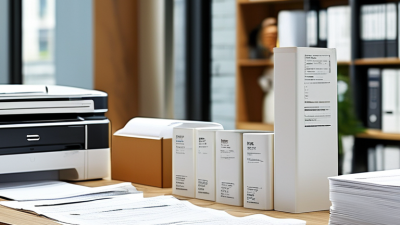
Global buyers commonly evaluate office paper suppliers through product consistency, delivery performance, sustainability documentation, quality certification, export capability, and responsive after-sales support. The chart presents a practical procurement weighting model totaling 100%.
The evaluation dimensions reflect widely used international procurement practices, including standardized paper specifications, quality-management systems, responsible forestry certification, export documentation, and supply-chain performance monitoring.
Office paper is not a single product. Buyers usually select copy paper for everyday printing, with A4 sheets dominating international administrative work. A3 paper suits drawings, presentations, and oversized tables. Laser paper has a smoother surface and resists heat during toner fusing. Inkjet paper absorbs liquid ink differently, so coating quality matters. Recycled office paper supports sustainability targets, but its shade and stiffness can vary between mills. Small differences become visible in high-volume printing.
ISO 216 defines A-series sizes, helping suppliers ship consistent formats across borders. ISO 9706 is relevant when buyers need durable, permanent documents. FAO’s 2023 forestry statistics placed global paper and paperboard production above 400 million tonnes in 2022, showing the scale of this supply chain. CEPI reported a European paper recycling rate of about 79% for 2022. That figure covers paper broadly, not office grades alone. This distinction matters.
For international applications, buyers should check basis weight, brightness, opacity, moisture resistance, and packaging strength. A 75 gsm sheet may reduce freight weight, yet it can show text through on double-sided forms. A 90 gsm grade often feels better for reports and contracts. Not always. Humid ports can curl poorly wrapped paper before it reaches the printer. Suppliers should provide mill data, test methods, and batch traceability. Country-specific recycling claims also need careful verification; a recycled label does not automatically prove responsible sourcing.
A practical comparison of commonly traded office-paper categories, international format standards, purchasing specifications, and typical business applications.
| Office Paper Type | Common Weight Range | Typical Sheet Formats | Key Performance Characteristics | Common International Applications | Buyer Specification Priorities | Packaging and Logistics Considerations |
|---|---|---|---|---|---|---|
| Multipurpose Copy Paper | 70–90 g/m² | A4: 210 × 297 mm A3: 297 × 420 mm Letter: 8.5 × 11 in | Designed for reliable feeding through laser printers, inkjet printers, copiers, and multifunction devices; generally available in white with smooth, printable surfaces. | Everyday correspondence, internal documents, invoices, reports, school and government administration, and general office printing. | Basis weight, sheet moisture, caliper, opacity, smoothness, runnability, cut accuracy, and compatibility with both monochrome and color equipment. | Usually packed in reams of 500 sheets and consolidated into cartons. Moisture-resistant wrapping and stable pallet stacking are important during sea and land transport. |
| Premium Presentation Paper | 100–160 g/m² | A4 A3 Letter Tabloid: 11 × 17 in | Heavier and more opaque than standard copy paper, offering a more substantial feel for high-quality text, graphics, and business documents. | Business proposals, certificates, training materials, menus, presentation inserts, premium reports, and short-run marketing documents. | Printer media limits, stiffness, opacity, surface smoothness, color reproduction, and whether the equipment supports automatic duplex printing at the selected weight. | Higher basis weight increases shipping weight and cubic volume per printed page. Cartons should protect corners from crushing and abrasion. |
| Inkjet Photo and Graphic Paper | 120–300 g/m² | A4 A3 Letter Legal: 8.5 × 14 in | Available with matte, satin, or gloss surfaces. Coatings are engineered to control ink absorption and improve image sharpness and color density. | Office posters, charts, product visuals, event materials, training graphics, proofing, and small-batch photographic output. | Printer and ink compatibility, coating side, drying time, color gamut, surface finish, curl control, and resistance to fingerprinting or smudging. | Protective interleaving or sealed moisture barriers may be required. Gloss-coated sheets need careful handling to reduce surface scuffing. |
| Recycled Office Paper | 70–100 g/m² | A4 A3 Letter | Produced with a proportion of recovered fiber. Quality varies by recycled-fiber content, de-inking process, brightness target, and manufacturing controls. | Routine office printing, sustainability-focused procurement, public-sector documentation, educational use, and internal communications. | Declared recycled content, post-consumer content where required, whiteness or brightness, opacity, dust level, de-inking quality, and environmental documentation. | Buyers should verify packaging claims and certification documents for the destination market. Keep cartons dry because recycled fibers can be more sensitive to moisture variation. |
| Colored Office Paper | 80–120 g/m² | A4 A3 Letter Legal | Dyed or pigmented throughout the sheet, typically offered in pastel and strong colors for visual organization and document identification. | Section dividers, notices, forms, filing systems, classroom materials, workflow documents, and internal promotional communications. | Color consistency between lots, opacity, lightfastness for displayed documents, printer compatibility, and duplex-printing performance. | Color-coded cartons and clear lot identification help prevent warehouse picking errors. Separate storage from materials that may transfer color or moisture. |
| Pre-Printed Business Form Paper | 70–100 g/m² | A4 Letter Legal Custom sizes | Printed with fixed text, lines, logos, or security features before variable information is added by office printers or forms systems. | Invoices, delivery notes, purchase orders, statements, applications, receipts, and controlled administrative forms. | Print registration, barcode readability, toner adhesion, paper grain direction, perforation quality, variable-data alignment, and archival requirements. | Custom designs require documented artwork approval and production lead time. Use protective packaging to prevent edge damage and print abrasion. |
| Carbonless Copy Paper | Typically 50–90 g/m² per ply | A4 Letter Legal Continuous forms | Multi-part paper that creates duplicate or triplicate handwritten or impact-printed copies without separate carbon sheets. | Transport documentation, service records, delivery confirmations, inventory forms, work orders, and manually completed transaction records. | Number of parts, image intensity, writing pressure, ply sequence, burst strength, print compatibility, and legibility of all copies. | Store flat and protect from excessive heat, humidity, pressure, and contamination. Packets should remain correctly collated during shipment. |
| Security and Archival Office Paper | 80–120 g/m² | A4 A3 Letter Legal | May include watermarks, controlled fibers, tamper-evident features, high permanence, or resistance to unauthorized alteration. | Certificates, official records, legal files, examination documents, controlled forms, and long-term institutional archives. | Security-feature verification, permanence, pH or acid-free status where applicable, opacity, traceability, and compatibility with printing and filing systems. | Require controlled inventory procedures, sealed packaging, lot traceability, and protection from humidity, sunlight, and unauthorized access. |
| Continuous Computer Form Paper | 60–90 g/m² | Tractor-feed formats Custom widths Single or multi-part | Manufactured in connected fan-fold sheets with tractor holes for impact or specialized continuous-feed printers. | Warehouse labels, logistics records, utility statements, legacy enterprise systems, point-of-sale documents, and high-volume data processing. | Form width, fold depth, tractor-hole accuracy, ply count, perforation quality, printer specifications, and fan-fold stability. | Fan-fold cartons need strong compression resistance. Keep cartons upright or as specified to avoid crushed folds and feeding problems. |
Top Office Paper Suppliers for Global Buyers?
How to Evaluate Office Paper Quality, Certifications, and Sustainability
Reliable office paper evaluation starts with performance, not a polished catalogue. Request samples from each supplier and test them in your actual printers. Check sheet brightness, opacity, thickness, moisture, and surface smoothness. A clean cut matters. Uneven edges can increase jams and paper dust.
Record results across several print runs. Observe duplex alignment, toner adhesion, curl, and feeding consistency. Ask for technical data sheets and recent laboratory reports. Quality management certification, such as ISO 9001, can support process reliability, but it does not guarantee every shipment. Batch controls still matter. I have found that a small sample can hide problems. Larger trials reveal them.
Sustainability claims require careful verification. Look for recognized forest-management certification, recycled-fiber percentages, and a valid chain-of-custody document. Check whether the certificate covers the exact product and supplier site. Environmental management certification, such as ISO 14001, may indicate structured controls, yet it is not proof of low emissions. Ask about energy use, water management, bleaching methods, packaging, and transport distance. Recycled paper is not automatically the best choice. Its quality, collection system, and manufacturing data deserve review. Ask difficult questions. Keep the evidence.
For global buyers, office paper sourcing depends on more than the lowest quotation.
Pricing, logistics, and supplier capacity must be reviewed together. A practical comparison should include paper weight, sheet size, moisture level, packaging, and delivery terms.
A low quote can look brilliant and still be wrong. Hidden costs may include pallet changes, port handling, inspections, or currency movement. Ask suppliers for a complete landed-cost estimate, not only a factory price.
Logistics needs real evidence.
Check the production location, usual loading port, export experience, and available shipping routes. Request carton dimensions and pallet counts before booking freight. These details affect container utilization.
A supplier that responds clearly can reduce avoidable delays. However, delivery promises still need testing. Ask for recent production and shipping records. Weather, port congestion, and customs inspections can disrupt even careful plans.
Capacity deserves equal attention.
Review monthly output, reserve stock, peak-season scheduling, and backup equipment. A supplier may show impressive machinery but lack enough skilled operators. That matters.
Buyers should request a trial order before committing to annual volume. Inspect samples for brightness, cutting accuracy, dust, and printer performance.
My own purchasing view is imperfect: I once gave too much weight to unit price during an early comparison. The cheaper option created more handling work and slower replenishment. A stronger supplier evaluation uses verified data, realistic forecasts, and written service terms.
Top Office Paper Suppliers for Global Buyers?
Comparing Leading Office Paper Suppliers Across International Markets
Global office paper sourcing depends on more than price. Buyers should compare sheet brightness, weight, moisture resistance, and packaging strength. A carton that survives a dry warehouse may fail in a humid port. Practical supplier reviews should examine delivery records, production capacity, and responses to damaged shipments. Small details matter.
Market requirements also vary. European buyers may prioritize recycled content and documented forest sourcing. Buyers in tropical regions often need sealed reams and stronger pallet wrapping. Public-sector customers may request specific environmental certificates, while private offices may focus on printer performance and cost per printed page. Ask for samples from different production batches. One sample can hide inconsistency.
Payment terms deserve careful attention. A low quotation may exclude inland transport, port handling, or inspection fees. That mistake is common. Suppliers should provide clear specifications, realistic lead times, and traceable quality documents. Experienced buyers can request test results for curl, dust, opacity, and copier compatibility. Still, no supplier is perfect. Delivery forecasts can change, and sustainability claims require verification rather than trust. Comparing three or four suppliers using the same checklist usually reveals gaps in service, communication, and regional readiness.