Leave Your Message

China Best Thermal Receipt Paper Supplier for Global Buyers?

Choosing the best Thermal Receipt Paper supplier for global buyers requires more than comparing price per roll. It demands evidence.

Grand View Research estimated the global thermal paper market at approximately USD 4.3 billion in 2023. Its report also projects continued growth through 2030, supported by retail, logistics, healthcare, banking, and point-of-sale applications. Smithers has similarly identified rising demand for high-performance thermal grades, especially those offering stronger image stability and improved environmental profiles.

The practical question is simple: will the receipt remain readable after heat, friction, moisture, and transport? A roll may look identical during inspection. It may perform very differently inside a busy supermarket printer.

As thermal-paper specialist Dr. Wolfgang K. R. Steiger observes, “Thermal paper quality is measured where the printed image must still be trusted.” This principle matters for overseas buyers. Supplier credibility should include coating specifications, basis weight, core dimensions, roll length, barcode performance, and batch-level quality records.

Reliable manufacturers should provide test samples and explain their phenol-free or bisphenol-reduced options clearly. They should also disclose packaging details, pallet protection, and production consistency. Certificates alone are not enough.

That is an uncomfortable point.

Some buyers focus heavily on the lowest quotation. This can create faded receipts, printer jams, customer complaints, and unnecessary replacement costs. A stronger sourcing decision compares total operating value, not only purchase price.

China remains a major manufacturing base for Thermal Receipt Paper, with broad converting capacity and competitive export infrastructure. However, capability differs widely between suppliers. Global buyers should verify factory experience, export records, technical support, and independent test results before selecting a long-term partner.
China Best Thermal Receipt Paper Supplier for Global Buyers?

What Makes China a Leading Thermal Receipt Paper Supplier?

China has become a leading thermal receipt paper supplier through scale, process control, and flexible production. Smithers’ The Future of Thermal Paper to 2028 reports continued global demand growth, supported by retail, logistics, banking, and healthcare applications. Grand View Research also identifies point-of-sale receipts as a major market segment.

Chinese manufacturers often combine base-paper sourcing, coating, slitting, and packaging in one supply chain. This shortens lead times and improves batch consistency. Buyers can request 55–80 gsm paper, customized roll widths, core sizes, and packaging formats. Those details matter when rolls run through thousands of terminals each day.

Quality is more than a white surface. Experienced suppliers test thermal sensitivity, image density, curl, dust, moisture resistance, and shelf life. Independent laboratory reports should support claims about coating chemicals and restricted substances. Product documentation must be checked against the destination market’s requirements.

The system is not flawless. Some low-cost rolls fade quickly or create excess dust. That gap matters. A reliable sourcing process should include pre-shipment samples, coating inspection, roll-length verification, and traceable production records. China’s advantage is practical: broad capacity, technical labor, responsive customization, and competitive logistics. Price alone, however, remains a poor quality test.

China Best Thermal Receipt Paper Supplier for Global Buyers?

What Makes China a Leading Thermal Receipt Paper Supplier?

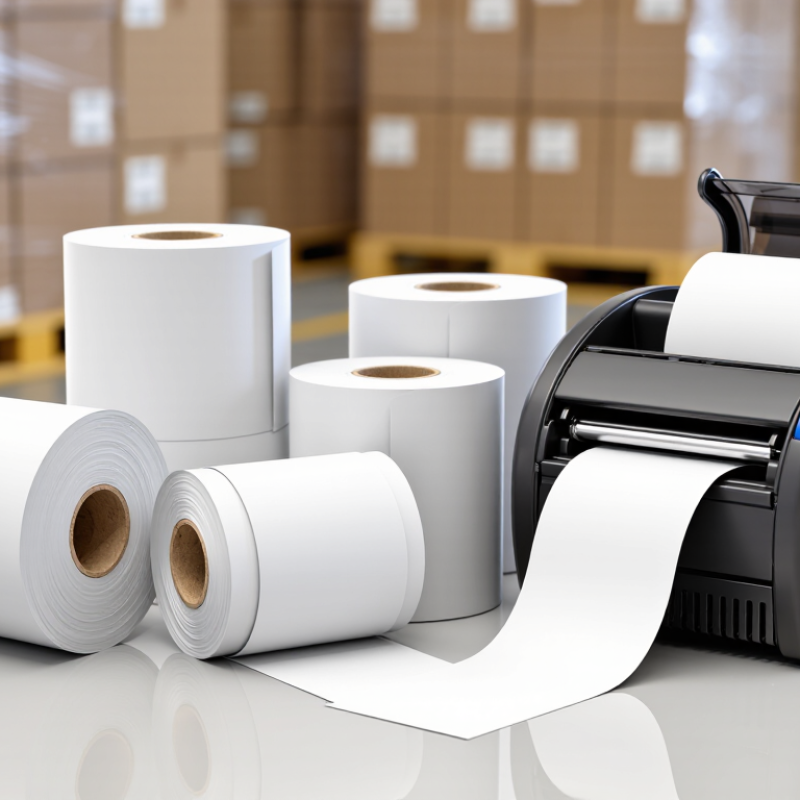
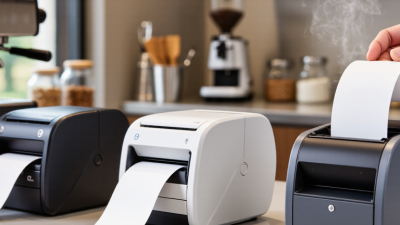
Why these dimensions matter: 80 mm, 57 mm, and 44 mm are widely used thermal receipt roll widths for retail POS systems, transport ticketing, hospitality, kiosks, and mobile printers. China’s large converting capacity supports flexible slitting, private-label packaging, customized core sizes, and high-volume export orders across these standardized formats.

How Thermal Receipt Paper Is Manufactured in China

China Best Thermal Receipt Paper Supplier for Global Buyers?

How Thermal Receipt Paper Is Manufactured in China

Manufacturing begins with large parent rolls of base paper. Chinese mills inspect moisture, thickness, smoothness, and winding tension. These details affect printer feeding. A thermal coating is then mixed in controlled batches. It usually contains color-forming chemicals, developers, binders, and protective additives. Operators measure viscosity before coating. Small errors can create pale images or uneven darkness. The process looks simple. It is not.

A precision coater spreads the formula across the paper surface. Heated air removes moisture through several drying zones. Temperature and line speed must stay balanced. Excess heat may damage sensitivity. Insufficient drying can cause blocking during rewinding. After curing, technicians test image density, friction, curl, and roll dimensions. They also inspect the surface under angled light. Specks are easy to miss.

The jumbo roll is slit into common receipt widths and rewound with controlled tension. Core size, winding tightness, and edge quality are checked before packing. Reliable suppliers retain samples from each production lot. They can provide test reports, restricted-substance declarations, and traceability records for different markets. Buyers should request samples from the actual batch, not only a showroom roll. A clean print today may still fade later, so accelerated aging tests deserve attention. Even careful factories sometimes adjust coating weight after feedback. That weakness is worth discussing, not hiding.

China Best Thermal Receipt Paper Supplier for Global Buyers? - How Thermal Receipt Paper Is Manufactured in China

Manufacturing Dimension Typical Practice in China Quality or Technical Control Relevance for Global Buyers
1. Base Paper Selection Manufacturers commonly use smooth paper grades designed for thermal coating, with basis weights often selected around 48–80 g/m² for receipt applications. Basis weight, caliper, tensile strength, smoothness, moisture, and reel appearance are checked before coating. Suitable base paper helps improve printing consistency, feeding performance, and resistance to paper jams.
2. Thermal Coating Preparation The coating formulation generally contains a color former, a developer, a sensitizer, binders, pigments, and other functional additives dispersed in water or another controlled medium. Particle dispersion, viscosity, solid content, pH, and coating uniformity are monitored during batch preparation. A stable formulation supports clear images, consistent shade, and predictable performance across different receipt printers.
3. Coating Application The thermal layer is applied to one side of the base paper using industrial coating equipment such as blade, rod, or roll-coating systems. Coating weight, coverage, surface defects, streaks, pinholes, and edge quality are controlled throughout the production run. Uniform coating is essential for even heat response and legible receipts at normal printer settings.
4. Drying and Curing After application, the coated web passes through controlled drying zones to remove moisture and stabilize the coating structure. Drying temperature, web speed, residual moisture, and coating adhesion are checked to reduce curling and blocking. Proper drying improves roll stability during transport, storage, and high-speed printing.
5. Surface Finishing Calendering or other finishing operations may be used to improve smoothness, gloss, print density, and winding quality. Surface roughness, gloss, friction, stiffness, and print-image uniformity are evaluated against internal specifications. A well-finished surface supports smoother printer operation and sharper barcodes, text, and graphics.
6. Slitting and Rewinding Large master reels are slit into smaller rolls according to the buyer’s required width, core size, outside diameter, and winding direction. Roll width tolerance, core alignment, telescoping, loose edges, splice control, and roll hardness are inspected. Accurate converting reduces installation problems and helps rolls fit common POS, ATM, kiosk, and mobile printers.
7. Printing and Packing Optional reverse-side printing may include usage instructions, promotional graphics, recycling information, or security patterns before final packing. Print registration, ink adhesion, barcode readability, packaging strength, and carton labeling are verified. Customized packing and printing can simplify warehouse handling and support retail or distributor requirements.
8. Image Performance Testing Finished samples are printed on compatible thermal printers to assess darkness, image uniformity, response speed, and background stability. Testing may include optical density, sensitivity, barcode readability, low-temperature response, and resistance to premature coloration. Performance testing helps buyers match the paper with their printer models and operating conditions.
9. Environmental and Storage Checks Thermal paper is typically evaluated under controlled heat, humidity, light, and chemical-contact conditions because these factors can affect image stability. Samples may be checked for fading, background development, coating transfer, and dimensional changes after exposure. Clear storage guidance is important for international shipments and warehouse environments with variable temperature or humidity.
10. Chemical Compliance Global buyers may request thermal paper produced without intentionally added bisphenol A (BPA), and some markets also restrict or regulate bisphenol S (BPS) and other substances. Declarations, supplier documentation, and laboratory test reports can be used to verify restricted-substance requirements for the destination market. Compliance documentation reduces customs, retail, and regulatory risks; requirements should be confirmed for each importing country.
11. Packaging and Export Protection Finished rolls are commonly packed in moisture-resistant inner bags, cartons, or palletized export units suitable for container transportation. Carton compression, moisture protection, roll count, pallet stability, and shipping marks are inspected before dispatch. Appropriate export packaging helps prevent crushed rolls, moisture damage, and identification errors during international logistics.
12. Buyer Specification Control Production can be organized around roll width, length, core diameter, paper grade, coating side, packaging format, and private-label requirements without displaying manufacturer branding. Approved samples, signed specifications, batch records, and pre-shipment inspections help maintain consistency between orders. A written specification is the most practical way to compare suppliers and reduce variation in repeat purchases.

Buyer note: Actual specifications, chemical restrictions, test methods, and storage life should be confirmed against the destination country’s regulations and the operating requirements of the target thermal printers.

Which Quality Standards Matter to Global Thermal Paper Buyers?

China Best Thermal Receipt Paper Supplier for Global Buyers?

Global buyers should judge thermal paper by measurable performance, not a bright surface alone. A perfect white roll is not always a better roll. Basis weight, caliper, coating uniformity, image density, and printer compatibility matter more at checkout. Smithers’ market outlook, The Future of Thermal Paper to 2028, identifies steady demand from retail, logistics, healthcare, and self-service terminals. This growth raises a practical concern: suppliers may increase output while reducing coating consistency.

Chemical compliance deserves equal attention. The European Union restricts bisphenol A in thermal paper to 0.02% by weight under REACH. Buyers should request recent third-party test reports for BPA, BPS, heavy metals, and restricted substances. Safety data sheets alone are not enough. Ask for batch traceability, production dates, and test methods. ISO 9001 certification supports process control, but it does not prove thermal image quality. That distinction is often missed.

Tips: Test samples in the actual printer. Check darkness, fading, curl, dust, and barcode scanning after heat and light exposure. Request aging data, but question unrealistic claims. Grand View Research estimates the thermal paper market will continue expanding through 2030, yet market forecasts vary by methodology. Buyers should compare reports carefully. An 80-micron roll may feel premium, but poor sensitivity can increase energy use and create unreadable receipts. Supplier audits, retained samples, and clear acceptance limits remain more reliable than polished brochures.

How to Evaluate Chinese Thermal Receipt Paper Suppliers

Choosing the best Chinese thermal receipt paper supplier requires more than comparing prices. Begin with product evidence, not polished promises. Request samples in your actual printer models. Check 80 mm and 57 mm widths, core size, roll length, and winding direction. Measure paper weight and thickness with calibrated tools. Print dense receipts, fine text, and barcodes. Look for dark, even images without gray backgrounds. A sample may look excellent. It can still hide production variation.

Ask for a clear specification sheet and recent batch records. Reliable suppliers should explain thermal sensitivity, storage limits, coating structure, and material declarations. Request test reports for restricted substances from competent laboratories. Verify that documents match the exact paper grade. Do not accept certificates without checking their scope and dates. Factory experience matters. Review coating lines, slitting equipment, dust control, and inspection points through an audit or live video tour. Ask how defects are recorded and corrected. Honest answers are more valuable than perfect claims.

Evaluate delivery reliability using actual export records, not only promised lead times. Confirm monthly capacity, minimum order quantity, carton protection, pallet methods, and replacement procedures. Ask for lot coding on every carton. This supports traceability when fading or curling appears later. Store trial rolls for several weeks under normal office conditions. Test them again after heat and humidity exposure. I would score quality, consistency, communication, and total landed cost separately. Price deserves attention. It should not dominate the decision. One weakness remains: remote audits cannot reveal everything. A small pilot order often exposes problems that a presentation conceals.

What Export and Customization Factors Should Buyers Consider?

Global buyers should evaluate more than the lowest quotation when selecting a thermal receipt paper supplier from China. Grand View Research estimated the global thermal paper market at approximately USD 4.4 billion in 2023, with continued growth through 2030. This expansion increases supplier choices, but quality differences remain visible. Buyers should verify basis weight, roll length, core diameter, coating sensitivity, image density, and storage stability. A roll may look identical during inspection, yet fade after several weeks in heat or sunlight.

Export planning requires practical evidence. Ask for batch test reports, safety documentation, carton specifications, and loading photographs. For European shipments, review current chemical requirements, including restrictions involving BPA and related developers. For other markets, confirm local packaging and paper-contact rules before production. Customs delays often come from unclear product descriptions, inconsistent carton marks, or incorrect roll measurements. Incoterms, moisture protection, pallet limits, and insurance should also be agreed in writing. Smithers’ thermal paper industry analysis highlights continued demand from retail, logistics, and payment applications, where reliable print performance remains essential.

Tips: Send the supplier your actual printer model, roll drawing, and monthly forecast. Request a pre-production sample and test it for darkening, tearing, curl, and barcode readability. Keep one approved sample from every batch. I would not rely only on laboratory data; warehouse conditions can be harsher than testing rooms. Custom colors, logos, and private packaging are possible, but they may raise minimum order quantities and increase lead times. That trade-off deserves careful review.