Essential Printing Paper Tips for Global Buyers in 2026
The global market for printing paper is evolving rapidly as we approach 2026. Expertise in this field is crucial for buyers who want to make informed decisions. John Smith, a recognized authority in the printing industry, emphasizes, "The right paper choice can transform your print quality and impact your brand." Understanding the nuances of printing paper is essential for success.
As buyers navigate the complexities of global sourcing, they must consider the different types of printing paper available. Each type serves a unique purpose and has specific qualities. Knowing these differences can prevent costly mistakes. For instance, using the wrong grade for a project can diminish the output quality.
Additionally, sustainability is becoming more significant in the printing paper industry. Eco-friendly options are now at the forefront of buyer considerations. However, finding a balance between quality, cost, and environmental impact is challenging. Buyers must reflect on their priorities and adapt to these changing market demands.

Understanding the Types of Essential Printing Papers for Global Buyers
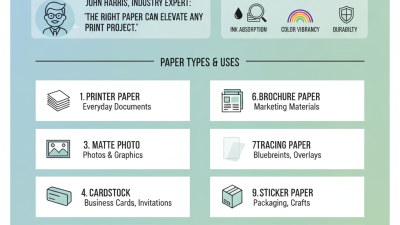
When selecting essential printing paper, understanding the various types is crucial for global buyers. There are several categories to consider. These include coated, uncoated, and specialty papers. Coated paper has a smooth finish, giving vibrant colors and sharp images. It's ideal for high-quality brochures and magazines. Uncoated paper is more versatile and absorbs ink differently, suitable for everyday printing tasks.
Tips: Always check the weight of your paper. Heavier paper often feels more professional. Test sample sheets before making bulk orders. This helps you gauge texture and print quality. Think about where the paper will be used. Specialty papers can enhance the design element for unique projects.
Another aspect to keep in mind is the environmental impact of your paper choice. Look for sustainable options that are sourced responsibly. Eco-friendly papers are gaining popularity among businesses that emphasize corporate responsibility. It's an area worth exploring, even if it sometimes may seem more costly. Don’t overlook the quality when going green. Always weigh the pros and cons of your choices.
Essential Printing Paper Tips for Global Buyers in 2026
| Paper Type |
Weight (gsm) |
Finish |
Common Uses |
Environmental Rating |
| Coated Paper |
150 |
Glossy |
Magazines, Brochures |
FSC Certified |
| Uncoated Paper |
80 |
Matte |
Books, Letters |
Recycled |
| Cardstock |
250 |
Textured |
Business Cards, Invitations |
Biodegradable |
| Photo Paper |
300 |
Satin |
Photography, Art Prints |
None |
| Newsprint |
45 |
Rough |
Newspapers, Flyers |
Recyclable |
Key Factors to Consider When Sourcing Printing Paper Internationally
When sourcing printing paper internationally, understanding the
quality standards of your target market is crucial. Each region may have specific requirements for
paper weight, brightness, and surface texture.
Researching these standards is key. It ensures that your products meet local expectations. Buyers may overlook these factors,
leading to mismatched deliveries and dissatisfied customers.
Another important aspect is establishing reliable supplier relationships.
Communication plays a significant role here.
Clear expectations regarding delivery timelines and
quality assurances are essential. Sometimes, suppliers may not provide what was promised. This can create issues down the line.
Conducting factory audits or requesting samples can help mitigate risks. Ongoing dialogue with suppliers is necessary to monitor any changes in practices or policies that may affect production.
Lastly, consider the
environmental impact of your sourcing decisions.
Sustainable practices are increasingly valued by consumers. Sourcing from suppliers that use
eco-friendly materials can enhance your brand's reputation. However, verifying claims can be challenging. Often, companies might present their products as sustainable without proper certifications.
Make sure to ask for documentation to support any sustainability claims.
Sustainability Trends Impacting the Global Printing Paper Market
The global printing paper market is witnessing a transformation driven by
sustainability trends. Buyers are increasingly
prioritizing eco-friendly materials. Consumer awareness around
environmental issues is higher than ever. This shift forces manufacturers to adopt
greener practices. Forest management and pulp sourcing are under scrutiny.
Transparent sourcing is becoming essential for credibility.
Recycled paper products are gaining traction. They
contribute to waste reduction and energy savings. Buyers should
also consider certifications indicating sustainable practices.
These labels often signal responsible sourcing. However, price discrepancies
could arise. Some eco-friendly products are more expensive than traditional options. This fact necessitates careful
budgeting and assessment.
Innovation in production methods is crucial. Biodegradable coatings and plant-based inks are being developed.
These advancements address environmental concerns effectively. Still, not all suppliers may be up to date with
these trends. It is necessary to engage with suppliers who demonstrate a commitment to sustainable practices.
This approach ensures that buyers make informed choices. Balancing cost and sustainability can be challenging yet vital
for long-term success.
Quality Control Measures for Printing Paper Suppliers in 2026
In 2026, quality control remains a vital aspect for printing paper suppliers. With increasing global demand projected to reach over 500 million tons, the need for consistency is paramount. Buyers seek assurance that the paper they purchase meets specific standards.
This consistency is often measured using metrics like brightness, moisture content, and weight. Any deviation can impact printing results significantly.
Suppliers must implement rigorous testing protocols to enhance reliability. According to a recent industry report, only 30% of suppliers meet international standards without complaint. Common issues like fluctuating moisture levels can lead to quality concerns. Robust practices, such as regular audits and third-party testing, can mitigate these risks and build trust. Employing new technology in quality assessment can also provide accurate results, ensuring a superior product.
Moreover, communication plays a crucial role in quality control. Open lines between suppliers and buyers foster transparency. Misunderstandings can arise from unclear specifications or expectations. Regular feedback from clients can highlight areas needing improvement. In an industry where customer satisfaction drives success, understanding these dynamics is essential for suppliers aiming to excel in quality management.
Navigating Import Regulations and Tariffs for Printing Paper Purchases
When importing printing paper in 2026, understanding import regulations is crucial. Many countries impose strict guidelines. Buyers must familiarize themselves with these rules to avoid delays and unexpected costs. Information about import duties can vary significantly between regions. Knowing the specific tariffs applicable to different types of paper will aid in budgeting.
Documenting product specifications is essential for compliance. Import authorities often request proof of quality and environmental standards. Buyers should prepare all necessary documentation in advance. This preparation can help establish trust with suppliers and reduce the risk of customs issues. However, navigating these regulations isn't always straightforward. Mistakes can happen, leading to fines or shipment holds.
Cultivating relationships with customs brokers can be beneficial. They offer expertise in local regulations and can guide buyers through the complexities of importing. Despite such assistance, challenges may arise, and flexibility is key. Adapting to changes in regulations or market demand is vital for success. Buyers need to remain vigilant and proactive to ensure smooth transactions.
Printing Paper Import Regulations and Tariffs in 2026