Choosing among China’s top Thermal Paper Rolls manufacturers requires more than comparing prices or factory photographs. Buyers need evidence of coating consistency, print clarity, roll dimensions, packaging discipline, and export experience. A receipt roll may look ordinary, yet its surface chemistry controls barcode readability, fading resistance, and printer performance. Small defects can create large operational costs.
Thermal-paper specialist Mark Ellison offers a useful reminder: “A reliable roll begins with controlled coating, not attractive packaging.” That principle guides this overview. It also reflects what experienced buyers inspect: clean edges, firm cores, stable winding, accurate GSM data, and samples tested under heat, humidity, and frequent handling. Manufacturers with laboratory controls deserve closer attention. So do suppliers that explain their raw materials clearly.
The list should not be treated as an absolute verdict. Factory capability can change, and public information is sometimes incomplete. That limitation matters. A supplier may perform well for supermarket receipts but struggle with logistics labels or long-term storage. Buyers should request recent samples, technical data sheets, compliance documents, and references from comparable markets. Ask direct questions. Test before committing.
This introduction examines ten Chinese manufacturers through practical purchasing criteria, including production capacity, customization, quality assurance, sustainability efforts, and international service. The goal is not to praise every company equally. It is to help readers identify dependable partners and recognize warning signs before placing a large order. In Thermal Paper Rolls, consistency usually matters more than the lowest quotation.
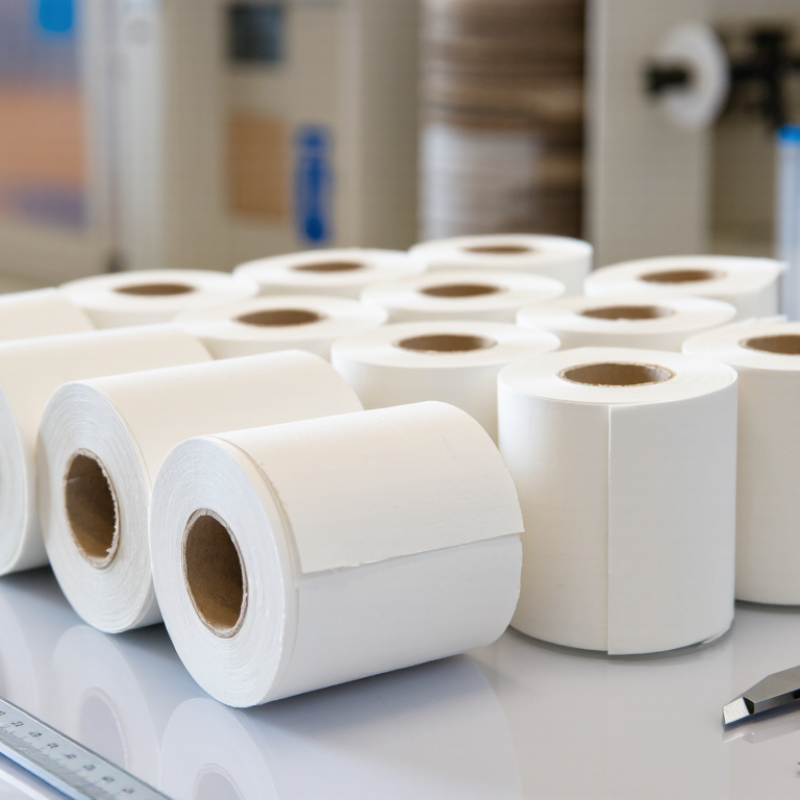
Thermal paper is coated with a heat-sensitive layer that creates images without ink or toner. A printer head activates this coating with controlled heat. The process is quick, quiet, and useful for receipts, labels, tickets, and weighing records. However, paper quality can change the printing result.
Manufacturer selection matters because coating consistency affects image darkness and clarity. A poor coating may produce pale text, scattered marks, or fading after short storage. In practical purchasing work, I would test rolls on the actual printer, not only trust a specification sheet. Check the paper width, core size, roll diameter, winding direction, and surface smoothness. Small differences can cause paper jams.
Storage performance also deserves attention. Heat, sunlight, moisture, and plastic contact may damage printed information. Reliable manufacturers should provide batch traceability, coating details, quality inspection records, and clear storage guidance. Ask whether the material meets the destination market’s safety requirements. Phenol-free options may suit applications involving frequent handling, but the exact formulation still needs verification.
Cost can be misleading. A cheaper roll may create more waste through fading, dust, or replacement stops. I have seen purchasing decisions focus too heavily on price. That approach needs reconsideration. Sample testing should include barcode scanning, handwritten contact, friction resistance, and several weeks of storage. The best supplier is not simply the largest one; it is the manufacturer that delivers stable performance for the intended equipment and environment.
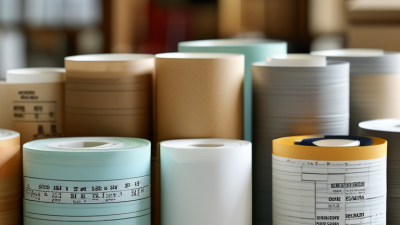
Thermal paper is coated with a heat-sensitive layer that produces images without ink or toner. The chart compares representative basis-weight ranges commonly used for different thermal paper roll applications. Basis weight affects print durability, stiffness, roll length, and compatibility with equipment.
Representative commercial specifications: POS receipt paper typically uses 48–58 gsm, ATM paper 55–65 gsm, thermal labels 60–80 gsm, and tickets or transport documents 80–120 gsm. Actual specifications vary by coating, application, printer, and required durability.
China Top 10 Thermal Paper Rolls Manufacturers?
Ranking China’s thermal paper roll manufacturers requires more than comparing annual output. Smithers’ industry report, The Future of Thermal Paper to 2028, projects continued global growth of roughly 5% annually. That growth makes quality control more important. A reliable manufacturer should show stable basis weight, even coating, clean rewinding, and low dust levels. Buyers should request test data for image density, print durability, moisture resistance, and roll length accuracy. Small variations can cause receipt jams.
Compliance also deserves serious attention. The European Chemicals Agency restricts BPA in thermal paper, while many buyers now request BPA-free or phenol-free alternatives. A responsible factory should provide current safety data sheets, restricted-substance testing, and batch traceability. Capacity matters, but it should be verified through machine lists, production records, and export experience. ISO-based quality systems can support reliability, although certification alone proves little. Some suppliers look impressive on paper. The rolls may tell another story.
Tips: Test samples from several production batches, not one attractive roll. Check the core diameter, winding tension, coating smoothness, and barcode readability. Ask for independent laboratory reports dated within the past year. Also compare complaint-handling time and replacement procedures. These details often reveal operational maturity better than a polished website. No ranking is perfect. Weight consistency, chemical safety, print performance, and transparent evidence before accepting a low quotation.
China’s leading thermal paper roll manufacturers compete through scale, coating control, and dependable delivery. Their strengths differ. Some operate high-speed coating lines for supermarket receipts. Others focus on small ATM rolls, shipping labels, or medical charts. The strongest suppliers usually manage base paper, coating, slitting, and packaging in one system. This can reduce variation between batches.
Demand remains substantial. China’s State Post Bureau reported more than 170 billion express parcels in 2023, supporting continued use of thermal shipping labels. Smithers’ thermal paper market research also identifies Asia as a major production and consumption region. These figures matter, but they do not prove every factory offers equal quality. A ranking is never fully objective. Public data can be incomplete. Buyers should examine coating weight, image density, roll length, core accuracy, and storage performance. Field testing is still essential.
Tips: Request samples from several shortlisted manufacturers. Print dense barcodes, not only simple receipts. Store rolls in heat, humidity, and normal office conditions. Check fading after several weeks. Ask for test reports covering phenol-free options, recyclability, and paper consistency. Certifications help, but practical testing often reveals more. One overlooked weakness is packaging: loose cartons can crush roll edges during long-distance transport. Supplier audits, traceable batch records, and clear complaint procedures provide stronger evidence of reliability than attractive catalogs.
| Rank | Anonymized Manufacturer Profile | Primary Product Focus | Typical Applications | Common Formats and Customization | Quality and Compliance Support | Sustainability Options | Main Competitive Strength |
|---|---|---|---|---|---|---|---|
| 1 | Profile A — High-Volume POS Converter | Standard direct thermal receipt rolls for retail and hospitality | Supermarkets, restaurants, convenience stores, payment terminals and self-service kiosks | Common widths include 57 mm, 58 mm and 80 mm; custom length, core size, packaging and roll diameter | Batch traceability, coating consistency checks and documentation commonly aligned with ISO 9001 production systems | Phenol-free options, recyclable packaging and responsibly sourced paper grades where available | Efficient high-volume production with stable supply for recurring standard-size orders |
| 2 | Profile B — Export-Oriented Thermal Roll Supplier | General-purpose thermal rolls for international distributors | Retail, logistics, banking, ticketing and office equipment | Metric and imperial specifications, private-label packaging, multilingual cartons and mixed container loading | Product specifications can typically include basis weight, image density, smoothness, shelf life and recommended storage conditions | FSC-certified stock may be available subject to paper-mill and order requirements | Flexible export packaging and experience adapting products to different regional specifications |
| 3 | Profile C — BPA-Free Thermal Paper Specialist | Phenol-free and BPA-free thermal paper rolls | Food retail, pharmacies, healthcare reception, public services and consumer-facing receipts | Standard POS sizes plus custom core diameters, roll lengths, perforation and packaging formats | Material declarations and test documentation may cover BPA/BPS status, restricted substances and print performance | BPA-free, phenol-free and recyclable paper options depending on the selected coating formulation | Strong positioning for buyers seeking alternatives to traditional phenol-based thermal coatings |
| 4 | Profile D — Logistics and Weighing Label Producer | Thermal labels, adhesive rolls and warehouse identification media | Courier services, warehouses, weighing scales, inventory control and shipping operations | Continuous rolls, die-cut labels, fanfold formats, removable or permanent adhesive and custom label dimensions | Adhesive performance, face-stock thickness, liner quality, barcode readability and environmental resistance can be specified | Recycled-content packaging and liner-reduction programs may be offered for selected products | Application-focused converting for barcode clarity, reliable dispensing and fast scanning |
| 5 | Profile E — ATM and Banking Roll Manufacturer | Long-life thermal rolls for ATMs, kiosks and transaction devices | ATMs, banking terminals, parking machines, fuel dispensers and ticketing systems | Longer roll lengths, tight winding, controlled roll diameter, anti-static treatment and custom core specifications | Print contrast, image retention, winding tension, edge quality and storage stability are commonly evaluated | Phenol-free grades and sustainably sourced paper may be available for compatible equipment | Reliable feeding and long-term readability in unattended or high-usage equipment |
| 6 | Profile F — Ticket and Event Media Converter | Thermal ticket stock and custom printed thermal media | Transport tickets, parking receipts, cinema tickets, amusement parks and event admission | Rolls, fanfold tickets, perforations, registration marks, reverse printing and variable ticket dimensions | Print sensitivity, perforation accuracy, barcode contrast and resistance to handling can be checked during production | Recyclable paper structures and reduced-ink packaging may be considered for selected projects | Advanced converting and finishing options for ticketing systems with customized formats |
| 7 | Profile G — Industrial Thermal Media Manufacturer | Thermal paper and labels designed for demanding operating conditions | Manufacturing, cold-chain logistics, outdoor labeling and industrial process control | Top-coated, water-resistant, oil-resistant, freezer-compatible and high-opacity grades may be available | Resistance testing can address moisture, heat, abrasion, light exposure and chemical contact, depending on the grade | Long-life products can reduce reprinting and material waste in suitable applications | Specialized coating performance for environments where standard receipt paper is insufficient |
| 8 | Profile H — Private-Label and OEM Supplier | OEM thermal rolls and contract converting for distributors | Wholesale distribution, retail chains, equipment resellers and branded consumables programs | Custom labels, cartons, cores, roll lengths, artwork, pallet configurations and mixed specifications | Pre-production samples, approved specifications, inspection records and lot-based quality control can be arranged | Paper sourcing and packaging choices can be adjusted to meet customer sustainability policies | Low-friction private-label development with adaptable packaging and order configurations |
| 9 | Profile I — Premium Image-Quality Producer | High-sensitivity and high-contrast thermal paper rolls | Premium POS systems, high-speed printers, receipts requiring crisp text and small graphics | High-resolution printing, fine text reproduction, smooth surfaces and compatible roll dimensions for selected printers | Optical density, background stability, image uniformity and printer compatibility can be controlled by grade | Phenol-free coatings and responsibly sourced base paper can be specified where supported | Sharp image quality and consistent printing performance across high-throughput devices |
| 10 | Profile J — Flexible Small-to-Medium Batch Converter | Custom thermal rolls for niche and regional requirements | Small retailers, local distributors, clinics, parking operators and specialized equipment users | Low-to-medium order quantities, custom widths, roll lengths, cores, perforations and packaging | Sample approval, dimensional inspection and application testing are commonly used before batch production | Recyclable cartons, reduced plastic packaging and phenol-free grades may be requested | Shorter development cycles and greater flexibility for non-standard specifications |
Selecting leading thermal paper roll manufacturers requires more than comparing prices. Product types should match the printer, application, and storage environment. Common options include standard receipt rolls, durable rolls, label stock, ticket paper, and colored thermal paper. Medical and logistics applications may require sharper imaging and stronger surface protection. Roll width, diameter, core size, and winding direction must also match the equipment.
Quality begins with stable thermal coating and clean cutting. A reliable supplier should provide test data for image density, print sensitivity, abrasion resistance, and aging performance.
Buyers should request samples and inspect a five-meter print run for streaks, fading, or uneven edges. Compliance with REACH and RoHS requirements may support international distribution.
BPA-free or BPS-reduced options are also available, but claims should be verified through laboratory reports. ISO 9001 certification can indicate process control, though it cannot replace product testing.
Customization may include roll dimensions, packaging, core color, perforation, adhesive backing, and branded carton printing. Some manufacturers can adjust coating sensitivity for low-energy printers or humid warehouses. Ask for batch traceability and retention samples.
Small details matter. A roll that fits poorly can stop a busy checkout line. No supplier is perfect. I would still compare samples from several factories, because a polished certificate cannot reveal every winding problem. Storage guidance also matters: heat, sunlight, and plastic contact can damage printed records.
Choosing among China’s top thermal paper roll manufacturers requires more than comparing prices.
Grand View Research estimates the global thermal paper market at over USD 4 billion in 2023, with continued growth through 2030. Demand is rising, but quality still varies between factories.
Ask each Chinese supplier for recent coating test results, not only product photos. Check basis weight, caliper, image density, curl, and roll length. A reliable supplier should explain the paper’s performance under heat, humidity, and prolonged storage. Request samples from different production batches. One sample can mislead. Confirm core diameter, outer diameter, winding direction, and packaging details before ordering. For retail or transport use, test barcode readability after thermal exposure. For sensitive applications, request declarations about chemical composition and applicable market requirements. Industry reports from Smithers also highlight sustainability and chemical compliance as growing purchasing factors.