Leave Your Message

China Top 10 Thermal Receipt Paper Manufacturers

Thermal Receipt paper looks simple at the counter: a pale roll, a dark printed total, and a clean cut. Its performance depends on more than the printer. Coating consistency, paper weight, image stability, and dependable supply all matter to retailers choosing a manufacturer.

Grand View Research estimated the global thermal paper market at about USD 4.1 billion in 2023 and projected a 6.2% compound annual growth rate from 2024 to 2030. These figures describe the broader market, not the performance of any single supplier. They do, however, show why buyers increasingly compare production capacity, product specifications, and technical support. Dr. Leonardo Trasande’s published research on bisphenol exposure offers a relevant expert reminder: material choices deserve attention beyond price. This is a paraphrase of his research, not a direct quotation.

This guide introduces ten leading thermal receipt paper manufacturers in China. It considers factors buyers can check, including coating uniformity, print clarity, roll dimensions, and available product documentation. A glossy surface alone proves little. Ask for samples, test them on your own printers, and check how the image holds up after handling and storage. No ranking captures every buyer’s needs. Supplier claims also deserve verification. That small extra step can prevent faded receipts, wasted rolls, and avoidable purchasing surprises.
China Top 10 Thermal Receipt Paper Manufacturers

Overview of China’s Thermal Receipt Paper Industry

China’s thermal receipt paper industry links base-paper suppliers, coating facilities, and converters that slit jumbo rolls into checkout sizes. The market serves supermarkets, restaurants, transport services, and smaller retailers. Production depends on consistent coating, accurate winding, and reliable supplies of pulp and chemical inputs.

Details matter. A thin spot in the heat-sensitive layer can produce pale printing, while uneven winding may cause feeding problems at the counter. Paper weight, roll width, core size, and image response are practical purchasing checks, not just catalogue details. Storage counts too: heat, humidity, and strong light can affect printed images.

The sector combines large-scale production with converters serving specific sizes and delivery needs. Yet quality is not automatic. A published specification may leave questions unanswered, such as image life in warm storage or performance across different printer settings. Buyers can compare samples, check dimensions, and test prints before repeat orders. Small checks help. Export demand encourages stable batches and clear documentation. Domestic demand also reflects the everyday use of point-of-sale systems. Some suppliers offer detailed technical data; others may need closer follow-up, a gap worth acknowledging.
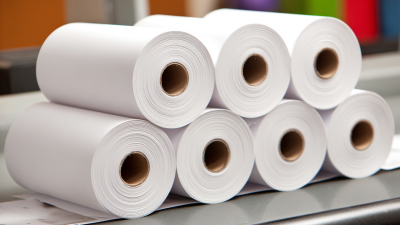
China Thermal Receipt Paper Industry: Common POS Roll Widths

Nominal widths of 57 mm and 80 mm are commonly used for thermal point-of-sale receipt rolls. These are product-format examples, not market-share figures or a ranking of manufacturers.

Thermal Receipt Paper: Materials, Production, and Quality Standards

Thermal receipt paper relies on a heat-sensitive coating rather than ink. A typical roll combines a smooth paper base, a thermal layer, and sometimes a protective topcoat. The base sheet must feed evenly through the printer, while the coating needs to react clearly to controlled heat. Small changes in coating weight or drying can affect image darkness and consistency. That matters.

Production usually includes paper preparation, coating, drying, slitting, and rewinding. Operators monitor coating uniformity and web tension as the paper moves through the line. A crease or uneven edge can cause jams later, even when the printed image looks fine. Not every defect is obvious at a glance.

Quality checks can include basis weight, thickness, image density, abrasion resistance, curl, and print performance across compatible devices. Samples may also be checked after storage, since heat, light, and humidity can fade the image. Test conditions should match the paper’s intended use; one laboratory result cannot represent every shop environment. Buyers can request recent test data and clarify any requirements for restricted coating chemicals. Specifications differ, and a perfect-looking roll is not automatically a reliable one. That distinction deserves attention.

How to Evaluate Thermal Paper Manufacturers in China

Evaluating thermal paper manufacturers in China requires more than comparing quoted prices. Grand View Research estimated the global thermal paper market at about US$4.18 billion in 2023, with projected growth through 2030. This market estimate signals demand, not product quality. Buyers still need to inspect production controls, coating consistency, and evidence behind each supplier’s claims.

Request samples from several production batches, not just one carefully prepared roll. Check print darkness, image clarity, background staining, curl, and performance after exposure to heat and light. Measure roll width, length, core diameter, and paper thickness against your specifications. Ask for test methods and recent quality records. A certificate alone is not enough.

Also review how the factory handles complaints, lot traceability, and packaging for humid or long-distance shipping. Ask whether its stated capacity covers your order during peak periods. Numbers help. Real checks matter more. A minor flaw in my own evaluation approach is relying too heavily on sample tests; they cannot prove every shipment will match. Compare trial-order results with later production batches, and document agreed tolerances before placing larger orders.

China Top 10 Thermal Receipt Paper Manufacturers - How to Evaluate Thermal Paper Manufacturers in China

Supplier evaluation scorecard: the ranking below prioritizes ten assessment criteria, not named companies. Compare suppliers against the same product specification and request verifiable evidence for each score.

Rank Evaluation Dimension What to Check Verifiable Evidence or Benchmark Weight
1 Product specification control Confirm basis weight, thickness, roll width, roll length, core size, winding direction, and tolerances for each SKU. Compare the signed specification with samples and batch inspection records. ISO 536 is a method for determining paper grammage; ISO 534 covers thickness and apparent density. 16%
2 Thermal coating and print performance Check image density, print uniformity, barcode readability, activation temperature, and performance on the intended printer models. Run print tests on the buyer’s devices using agreed settings; compare printed samples against a mutually approved reference. There is no single universal print-performance threshold for every printer and application. 14%
3 Batch-to-batch consistency Assess variation in paper weight, thickness, coating appearance, roll dimensions, and print results across production lots. Request dated inspection reports from multiple batches and agree in advance on sampling, test methods, and acceptance limits. 13%
4 Chemical and market compliance Identify the destination-market rules and obtain product-specific declarations and test documentation for applicable substances. For the EU, REACH Annex XVII Entry 66 restricts placing thermal paper containing BPA at a concentration equal to or greater than 0.02% by weight on the market. Verify current legal requirements for the destination market and product. 12%
5 Quality management and testing Review documented inspection procedures, calibration, nonconformance handling, corrective actions, and final-release controls. Check the validity and scope of any ISO 9001 certificate directly with the issuing certification body; certification alone does not establish the performance of a specific paper grade. 10%
6 Converting and roll workmanship Inspect edge quality, telescoping, loose winding, splices, dust, core fit, and packaging damage. Set defect definitions and tolerances in the purchase specification; inspect samples from finished rolls and record results by lot. 10%
7 Traceability and change control Confirm that finished rolls can be linked to production lots and that changes to raw materials or specifications are communicated. Request lot-code examples, retained-sample procedures, and written notification terms for changes to materials, manufacturing processes, or product specifications. 8%
8 Production capacity and process fit Evaluate whether available coating, slitting, and packing processes can meet the required grade, roll dimensions, order volume, and repeat-order needs. Validate capacity with production schedules, line capability information, and a trial order rather than relying on an unsupported stated capacity. 7%
9 Delivery and order reliability Compare confirmed lead times, order-change handling, export packing, shipping documents, and performance against agreed delivery dates. Review shipment records or trial-order performance; define delivery dates and remedies clearly in the purchase agreement. 5%
10 Fiber sourcing and sustainability claims Check whether environmental or responsible-sourcing claims apply to the specific product and are supported by valid documentation. For FSC or PEFC claims, verify certificate validity, scope, and product-chain coverage; do not treat a general company claim as proof that a particular shipment is certified. 5%
Total evaluation weight 100%

Suggested use: score each supplier from 1 to 5 against documented evidence, multiply each score by the criterion weight, and compare the resulting weighted totals. Confirm final acceptance limits, test conditions, and compliance obligations in writing before placing an order.

Profiles of China’s Top 10 Thermal Receipt Paper Manufacturers

Profiles of China’s top ten thermal receipt paper manufacturers are most useful when they compare capabilities, not just production scale. Grand View Research’s Thermal Paper Market report estimates the global market at about US$4.3 billion in 2023 and projects 6.1% annual growth from 2024 to 2030. This signals steady demand, but it does not rank Chinese suppliers. A careful profile should distinguish paper-making capacity from coating expertise, since consistent coating affects print clarity and image retention.

Compare each manufacturer’s product range, roll-width options, quality controls, and export experience. Ask for samples and test them in the intended printer. Check whether fine text stays sharp, the coating resists smudging, and rolls feed smoothly without excess dust. Small details matter. Also request documented specifications for paper weight, roll length, and storage conditions; these help buyers compare offers fairly. Factory audits and batch records provide useful evidence, though they cannot guarantee every shipment will perform identically. A top-ten list can miss smaller specialists, too. Treat rankings as a starting point, then verify claims against samples and current production records.

Products, Applications, and Key Differences Among Manufacturers

Thermal receipt paper serves checkout counters, self-service kiosks, parking terminals, and food-order systems. Its coating reacts to heat, creating print without ink. Grand View Research estimated the global thermal paper market at about US$4.2 billion in 2023, reflecting broad demand across retail and logistics. The figure describes the market, not a quality ranking.

Manufacturers differ in base-paper smoothness, coating uniformity, roll-width control, and resistance to heat, light, and moisture. These choices affect image sharpness and how long receipts remain readable. A grocery roll may prioritize fast, consistent printing; a delivery label may need stronger scuff resistance. Ask for samples and compare print darkness, edge quality, dust, and performance on your actual printer. Specifications can look impressive on paper. Real use sometimes disagrees.

Tips
Match paper width, core size, and roll diameter to the printer. Store samples away from sunlight and warm equipment, then check fading over time. Request coating and basis-weight data, plus batch-level quality records. One test is not enough. Suppliers may vary between batches, so repeat checks before large orders.