How to Write a Research Paper on Ultrasound Techniques?
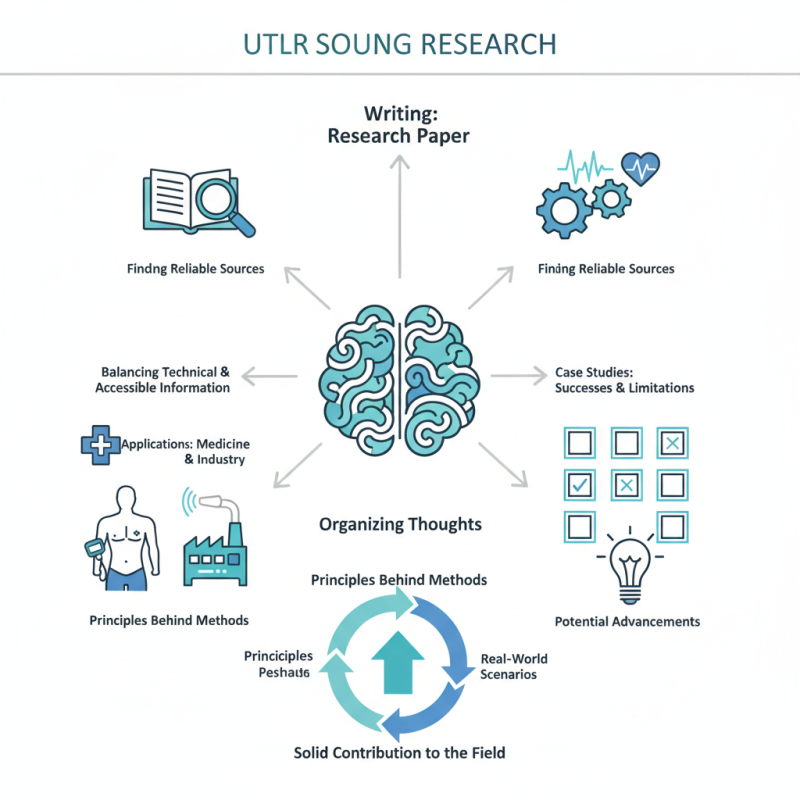
Writing an ultrasound paper can seem daunting. You might wonder where to start or how to organize your thoughts. Ultrasound techniques offer a fascinating area for exploration. They are widely used in medicine and industry, making them a relevant topic for research.
The goal is to present a clear examination of various ultrasound techniques. Your research should cover the principles behind these methods. It’s essential to highlight how they are applied in real-world scenarios. Including case studies can make your paper more engaging. Exploring both successes and limitations is equally important. This adds depth and shows critical thinking.
Consider the challenges you might face while conducting research. Finding reliable sources is often difficult. Balancing technical information with accessibility is a key consideration. Discussing potential advancements in ultrasound technology is also relevant. This can enrich your ultrasound paper and provoke thoughtful discussions. By addressing these elements, your research will become a solid contribution to the field.
Understanding Ultrasound Techniques: Overview and Classification
Ultrasound techniques play a crucial role in medical imaging. They utilize sound waves to produce images of organs and structures inside the body. The primary categories include diagnostic ultrasound and therapeutic ultrasound. Diagnostic ultrasound often assists in monitoring pregnancies and examining various body organs. Therapeutic ultrasound can help with pain management and tissue healing.
When exploring ultrasound techniques, consider their applications and limitations. Different types of ultrasound can yield varying results based on the operator's skill and equipment quality. A clear understanding of these techniques is vital for accurate diagnostics.
Tips: Always ensure proper patient positioning for optimal imaging results. Pay attention to probe selection, as different probes can yield different resolutions. Regularly updating your knowledge on advances in ultrasound technology is also crucial. The field is rapidly evolving, and staying informed can significantly enhance your practice. Balancing theory with practical experience can help avoid common misinterpretations of ultrasound images.
Key Applications of Ultrasound in Medical Diagnostics and Therapeutics
Ultrasound techniques have transformed medical diagnostics and therapeutics. Even with advancements, challenges remain. One key application lies in prenatal screening. It helps visualize the developing fetus. However, interpreting ultrasound images requires deep expertise. Misinterpretations can lead to unnecessary anxiety or missed issues.
Another important area is cardiac diagnostics. Ultrasound, or echocardiography, evaluates heart function. This non-invasive method shows heart structure in real-time. Yet, it’s not flawless. Some conditions can be misdiagnosed, especially in obese patients. Technicians must adapt their approach based on individual cases.
Therapeutically, ultrasound aids in targeting tissues for treatment. It’s used to guide needle placements in biopsies. Precision is crucial, but human error can arise. Training and experience can mitigate such risks. Overall, while ultrasound techniques offer immense potential, the medical community must continually refine practices.
Applications of Ultrasound Techniques in Medical Diagnostics
Methodologies for Conducting Research on Ultrasound Technologies
Research on ultrasound techniques requires a well-structured methodology. Start with a literature review to understand existing studies. The World Health Organization reports that ultrasound imaging has grown significantly in clinical applications. Accurate imaging leads to better patient outcomes, but gaps in methodologies must be addressed.
The usage of quantitative data is essential. A study by the Journal of Clinical Ultrasound highlighted that 85% of ultra-sound procedures can be performed more efficiently with standardized techniques. This emphasizes the need for a robust framework for research. Design your study to include both quantitative and qualitative analysis.
Ethical considerations are also crucial. Collecting patient data must follow strict guidelines to ensure confidentiality. Reflection on the ethical implications of your research can enhance the study's credibility. Aim for reproducibility in your methodologies, while acknowledging the limitations of your findings. This balance can lead to more comprehensive insights in ultrasound technology research.
Research Paper on Ultrasound Techniques - Methodologies
| Methodology |
Description |
Key Considerations |
Applications |
| Experimental Studies |
Conducting laboratory tests to explore new ultrasound techniques and their efficacy. |
Ensure ethical approval, control group usage, and reproducibility. |
Medical imaging, therapy applications |
| Literature Review |
Analyzing existing research to identify gaps in ultrasound technology. |
Focus on peer-reviewed journals, and recent publications. |
Guiding future research directions |
| Surveys and Interviews |
Gather insights from practitioners using ultrasound techniques in their field. |
Formulate clear questions and target relevant demographics. |
Understanding user experiences and challenges |
| Case Studies |
In-depth exploration of specific instances where ultrasound techniques have made an impact. |
Select diverse cases to represent different outcomes. |
Demonstrating real-world applications |
| Statistical Analysis |
Utilizing data collected from experiments to correlate ultrasound effectiveness. |
Select appropriate statistical tools and methods. |
Quantifying results for research validation |
Analyzing Current Trends and Innovations in Ultrasound Imaging
Ultrasound imaging has seen significant advancements in recent years. New techniques have improved accuracy and patient comfort. For example, 3D and 4D ultrasound provide detailed images in real-time. This helps clinicians make better decisions. However, these innovations may not be universally accessible, leading to disparities in care.
One of the trending innovations is artificial intelligence in ultrasound interpretation. AI algorithms can analyze images faster than human experts. They improve diagnostic accuracy but also raise questions about reliability. How much can we trust AI? Are there opportunities for errors? Training and standardization are crucial. Without proper oversight, misinterpretations may occur.
The integration of telemedicine is also noteworthy. Remote ultrasound consultations offer convenience. Patients can receive expert opinions without traveling. Yet, this method relies heavily on technology. Not all areas have sufficient internet access. These limitations must be addressed as the field evolves.
Best Practices for Data Collection and Interpretation in Ultrasound Studies
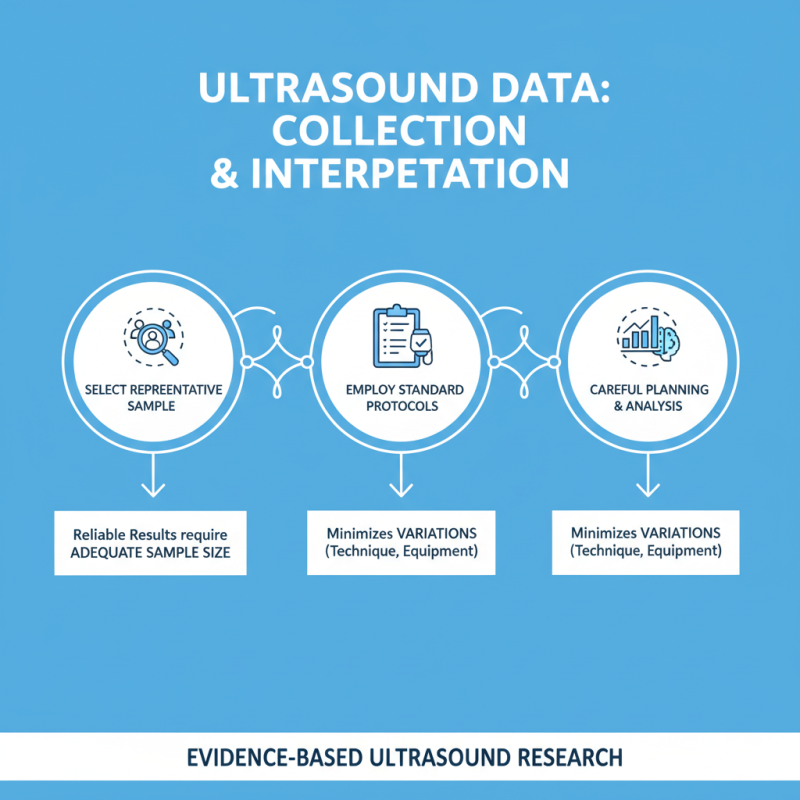
Collecting and interpreting data in ultrasound studies requires careful planning. Researchers should start by selecting a representative sample. A recent report indicated that many studies lack proper sample sizes, affecting the reliability of results. Employing standard protocols for data collection ensures consistent outcomes. This way, variations due to technique or equipment are minimized.
Interpreting data is equally challenging. Often, results can be subjective. A study showed that a significant percentage of ultrasound findings can lead to misdiagnosis if not carefully evaluated. Incorporating automated analysis tools can enhance accuracy, but they are not infallible. There should always be a manual review of critical cases.
Additionally, it’s crucial to document and reflect on the process. Keeping track of anomalies or unexpected results can provide valuable insights. Many researchers overlook this step, potentially neglecting significant findings. A reflective approach encourages continuous learning and improvement in ultrasound techniques.