2026 How to Choose the Best Thermal Papers for Your Printing Needs?
Choosing the right Thermal Papers is crucial for efficient printing. The market offers various options, each with unique features. It's not just about picking any paper; it impacts the quality and lifespan of your prints.
Different Thermal Papers serve different purposes. Some are designed for point-of-sale systems, while others focus on receipts or labels. Each type has its nuances. Quality can vary significantly, and that can affect your business operations, even if it’s subtle.
You might wonder what to consider when selecting Thermal Papers. Factors like print clarity, durability, and cost all play a role. It can be overwhelming, especially with many available choices. Reflecting on your specific needs is essential before making a decision. The wrong choice could lead to issues such as smudged prints or paper jams.
Understanding Thermal Paper Types and Their Characteristics
When selecting thermal papers, understanding their types and characteristics is crucial. Thermal papers fall into two main categories: direct thermal and thermal transfer. Direct thermal papers use heat-sensitive coatings. They print by applying heat directly on the surface. This type tends to fade over time, especially if exposed to heat or light.
On the other hand, thermal transfer papers require a ribbon to print. The image is created by melting the ink from the ribbon onto the paper. This method often results in sharper images and longer-lasting prints. However, thermal transfer papers can be more expensive and may not always be necessary for basic tasks.
Consider the texture and weight of the paper as well. Some papers are thicker and more durable, making them suitable for receipts or labels. Others are lightweight and best for short-term use. It's important to match the paper type to your specific printing needs. Experimenting with different types can lead to surprising results. Reflecting on the outcomes can help refine your choices in the future.
Key Factors to Consider When Choosing Thermal Paper
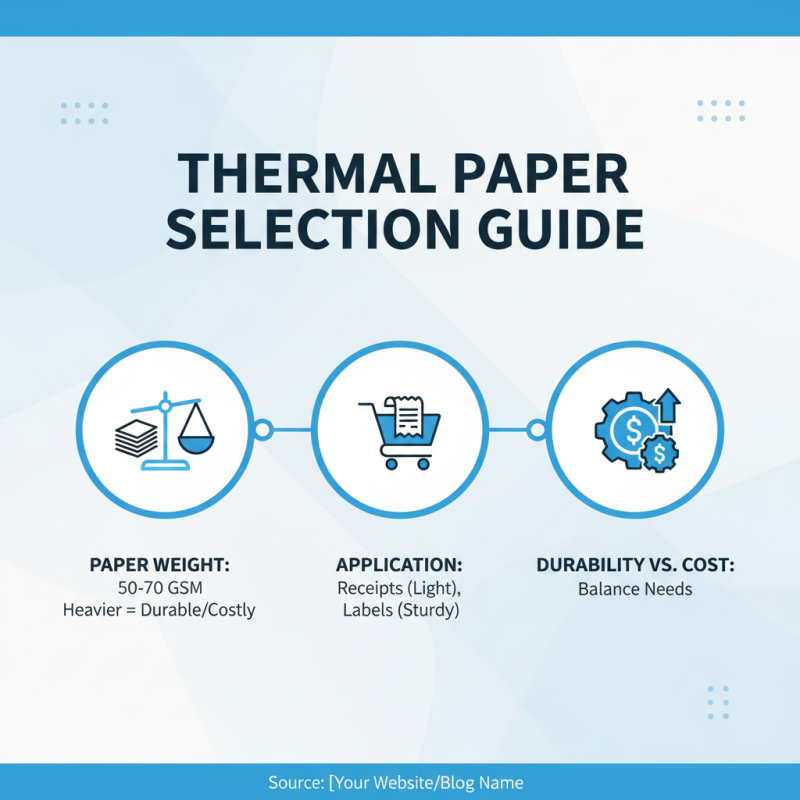
When selecting thermal paper, several key factors come into play. The weight of the paper matters. Standard weights typically range from 50 to 70 grams per square meter. Heavier papers provide better durability but often cost more. Consider the intended application. For receipts, a lighter paper may suffice. But for shipping labels, sturdier options are essential.
Surface coating is another important aspect. Some thermal papers have a special coating that enhances print quality. A smooth surface allows clearer, sharper images. Remember, not all printers work well with every type of thermal paper. Testing different types in your printer can be worthwhile.
Additionally, think about the environmental impact. Some papers are eco-friendly, while others may not be. Assessing how it aligns with your values is significant. There might be a trade-off between quality and sustainability. Exploring various options can feel overwhelming. It's easy to overlook finer details like storage conditions. Improper storage may lead to poor print results. Being aware of these can save future headaches.
Assessing the Compatibility of Thermal Papers with Printers
Choosing the right thermal paper involves understanding your printer's compatibility. Different printers have unique specifications. These specs affect how the thermal paper performs. Not all thermal papers are created equal. Some may work well, while others may not.
When evaluating thermal papers, check your printer’s requirements. Some printers need specific thickness or coating. Using the wrong paper can lead to poor print quality. For instance, faded prints or smudges may occur. Additionally, not every thermal paper is suitable for every environment. If your business involves high humidity, normal thermal paper may fail.
Testing is essential. Purchase small quantities first. Evaluate their performance in your printer. You may notice issues you didn’t expect. Pay attention to the color vibrancy and durability of prints. Consider also the cost-effectiveness. While cheaper options may seem appealing, they can lead to wastage. This is crucial for long-term use. Keep these factors in mind to ensure optimal performance.
Evaluating Print Quality and Durability of Thermal Papers
Choosing the right thermal paper can significantly impact your printing results. The print quality is crucial for ensuring that your documents are clear and legible. When evaluating thermal papers, focus on contrast and sharpness. Look for papers that provide deep blacks and vibrant colors. Your prints should be easy to read, even from a distance.
Durability also matters. Some thermal papers fade quickly, which can lead to legibility issues over time. Consider the paper's resistance to heat, humidity, and light. Quality papers resist smudging. They maintain their print for a longer duration. Conduct a simple test by printing samples. Check how well they hold up after exposure to varying conditions.
**Tips:** Always check reviews before purchasing. Users often share real-life experiences. They can provide insight into the paper's performance. Don’t hesitate to ask for samples when available. This test can help you make a better choice. Compare different products to see what works best for your needs.
Environmental Considerations for Selecting Thermal Paper Options
When selecting thermal paper, environmental considerations are crucial. Many thermal papers use harmful chemicals. These can leach into the environment. Choosing papers with fewer toxic substances is a step in the right direction. Recyclability also plays a significant role. Some thermal papers are not recyclable. This creates more waste in landfills. Assessing the life cycle of thermal paper can help gauge its impact.
Additionally, look for papers that are certified for sustainability. Certifications can indicate responsible sourcing. However, not all certifications are equal. Research what each certification means. Consider the manufacturing processes. Some methods may be more eco-friendly than others. You might find it challenging to navigate this space. It requires effort to balance quality and environmental impact.
Moreover, think about the long-term use of printed materials. Will they be discarded quickly? The answer can reveal a lot about your choices. Short-lived prints may warrant less costly options. Yet, investing in sustainable paper could benefit the planet in the long run. Reflect on your printing needs and patterns. The journey to eco-friendly choices isn't straightforward, but it is important.
Environmental Impact of Different Thermal Paper Types