How to Choose the Best Thermal Papers for Your Business Needs?
Choosing the right thermal papers for your business can significantly impact your operations. According to industry expert Mark Johnson, “Quality thermal papers can enhance printing performance and reduce operational issues.” This insight highlights the importance of selecting the right type for your specific needs. In the competitive landscape, the right thermal papers can improve efficiency and customer satisfaction.
When considering thermal papers, think about factors like durability, print quality, and compatibility with your printing systems. Some papers may resist fading, while others work best in high-speed printers. Pay attention to the thickness and sensitivity of each option. This can affect both the cost and the final output of your printed materials.
Ultimately, making an informed choice about thermal papers requires research and a good understanding of your business requirements. It's crucial to balance quality and budget. Sometimes, cheaper options lead to more significant issues down the line. Reflecting on these choices can lead to better decision-making in the future.

Understanding the Types of Thermal Papers Available in the Market
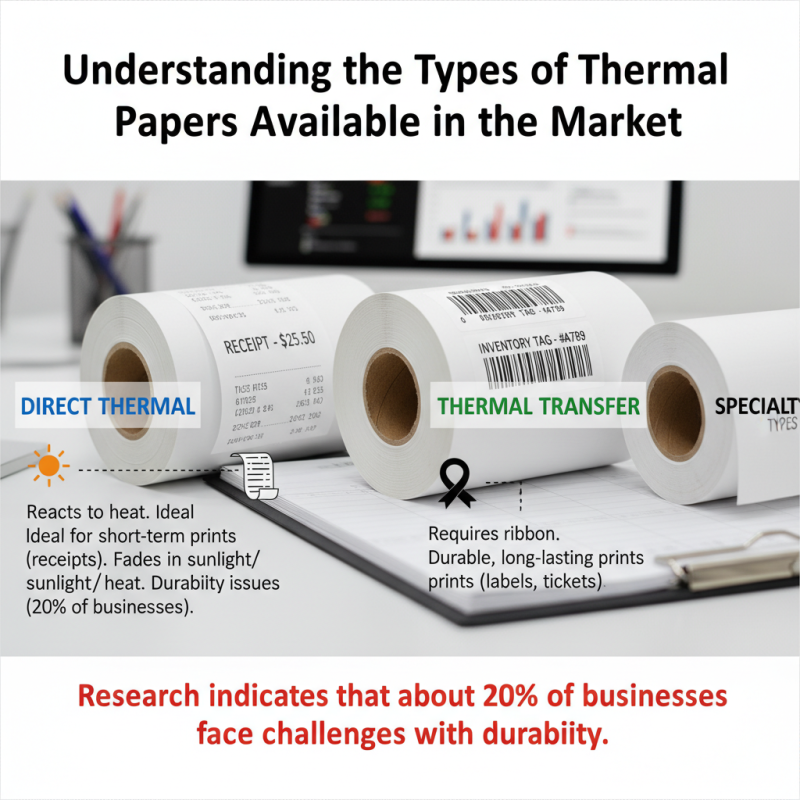
When selecting thermal papers for business applications, understanding the types available is crucial. Thermal papers are generally categorized into direct thermal and thermal transfer. Direct thermal paper reacts to heat, making it ideal for short-term prints like receipts. This type may degrade in sunlight or heat, leading to faded prints over time. Research indicates that about 20% of businesses face challenges with durability.
On the other hand, thermal transfer paper uses a ribbon to create a lasting print. This process offers higher quality images and is less susceptible to fading. According to industry reports, about 70% of labels require this type due to its superior longevity. Businesses should consider the environment where printouts will be used. For instance, fast-paced retail environments may benefit from direct thermal. While logistics and shipping industries often require the robust nature of thermal transfer.
Choosing the right thermal paper can impact operational efficiency. Many businesses underestimate this decision's implications. Studies show that poor-quality paper can lead to printer jams and increased costs. Evaluating the specific needs of your business can lead to better choices and reduced long-term expenses. Understanding these nuances is essential for making informed decisions.
Evaluating the Quality and Durability of Thermal Papers for Business Use
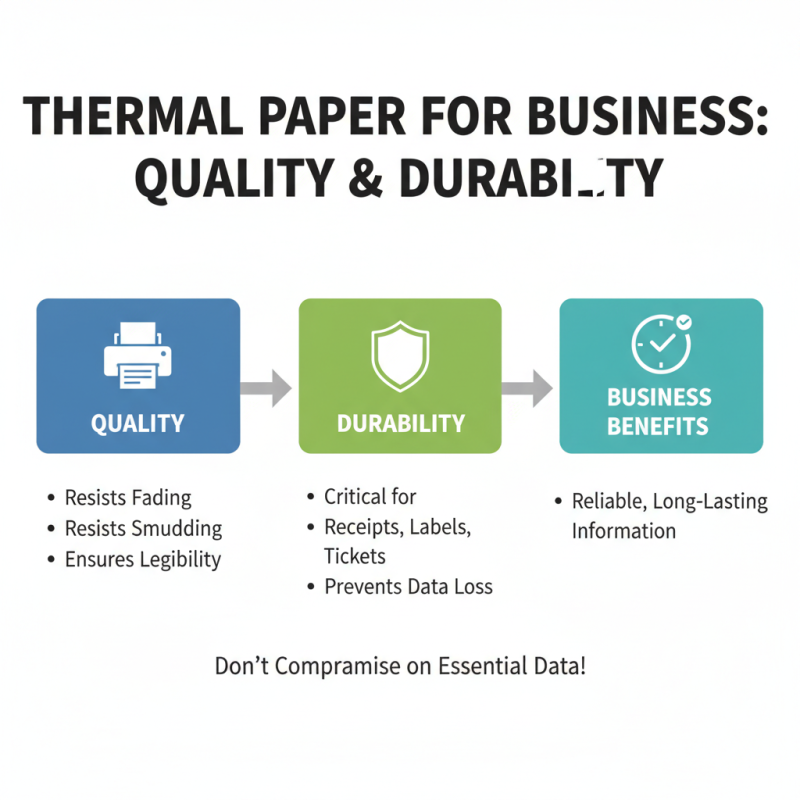
When evaluating thermal papers for business use, the quality and durability are critical factors. High-quality thermal papers resist fading and smudging, ensuring that printed information remains legible over time. Businesses that rely on receipts, labels, or tickets need durability. Otherwise, essential data may become unreadable.
Consider the texture and coating of the paper. A thicker, well-coated thermal paper is often more resistant to wear and tear. It can withstand various environmental factors, such as moisture and heat. In busy settings, such as retail or food service, durability is put to the test daily. Inferior quality can lead to issues like paper jams and poor prints, which create frustrations.
Reflect on your business's specific requirements. Does your operation involve high-volume printing? Are you concerned about longevity for important documents? Finding the right balance between price and long-term performance can be challenging. Don’t rush the decision. Take time to test samples and evaluate options before committing to a choice. Your business depends on reliable solutions.
Identifying the Specific Requirements for Your Business's Thermal Printing
When choosing thermal papers for your business needs, it’s essential to identify your specific printing requirements. Different businesses have varying demands based on their operations. Consider the thickness, coating, and durability of the paper. The nature of your prints and how long you need them to last should dictate your choice.
Tip: Evaluate the environment where the thermal paper will be used. Papers in humid areas may fare worse than those in dry environments. This factor can greatly affect the quality and longevity of your prints.
Weight is another important aspect. Thinner papers can be cheaper but may not provide the quality you need. Thicker papers offer better durability but can increase costs. It's crucial to balance price with performance.
Tip: Always request samples before finalizing your paper selection. Testing these samples can reveal unexpected issues. Sometimes, what looks good on paper does not perform well in practice.
Reflect on how your business uses printed materials. A café may prioritize short-term use, while a logistics company needs long-lasting labels. Understanding these needs ensures you select the right thermal paper that meets your specific business context.
Thermal Paper Thickness Comparison
This chart compares the thickness of different types of thermal papers typically used in business applications, measured in microns. Selecting the right thickness is crucial for optimizing printing quality and compatibility with thermal printers.
Comparing Cost-Effectiveness of Different Thermal Paper Brands
When selecting thermal papers, cost-effectiveness plays a crucial role. Various brands offer different prices, but the cheapest option isn't always the best choice. Quality often correlates with price. Papers that fade quickly can cost more in the long run. Evaluate each brand by examining user reviews and product lifespans.
Consider the print quality of thermal papers. Some brands might seem cheaper but can produce poor images. This can lead to customer dissatisfaction and wasted resources. Testing samples before bulk purchases is a wise choice. Gather feedback from team members about their experiences with each type.
Tips for making an informed decision include understanding the volume your business requires. Larger orders often come with discounts. Compare the price per roll and the length of each roll. Keeping track of supplier performance can also help in refining your choices. Ensure that your selected thermal paper aligns with the printer specifications and business applications to avoid malfunction and potential losses.
Assessing Environmental Considerations in Thermal Paper Selection
When selecting thermal paper for your business, environmental impact plays a crucial role. Many thermal papers contain harmful chemicals, which can affect both health and the ecosystem. It's essential to investigate the presence of Bisphenol A (BPA) and other toxic substances. Opting for BPA-free options can reduce health risks for employees and customers.
Recycling is another factor to consider. Some thermal papers are not recyclable due to their chemical treatments. This leads to more waste in landfills. Checking for FSC (Forest Stewardship Council) certification can ensure that the paper comes from sustainable sources. This small step can contribute to environmental preservation.
Don’t overlook local regulations regarding waste disposal. Different regions have specific guidelines that affect how thermal papers are managed. Staying informed about these can prevent potential legal issues. Always prioritize suppliers who emphasize eco-friendly practices. It's vital to balance business needs with a commitment to sustainability, even if it means investing slightly more upfront.
How to Choose the Best Thermal Papers for Your Business Needs? - Assessing Environmental Considerations in Thermal Paper Selection
| Paper Type |
Environmental Impact |
Durability |
Printing Quality |
Cost (per roll) |
| Standard Thermal Paper |
Moderate (contains BPA) |
1-3 years |
Good |
$20.00 |
| Eco-Friendly Thermal Paper |
Low (BPA-free) |
1-5 years |
Excellent |
$25.00 |
| Synthetic Thermal Paper |
Low (durable materials) |
5-10 years |
Superior |
$30.00 |
| Recycled Thermal Paper |
Moderate (made from recycled materials) |
1-3 years |
Good |
$22.00 |