2026 Best Receipt Rolls for Your Business Needs?
In the rapidly evolving landscape of business operations, selecting the right receipt rolls is critical. A recent report from the National Retail Federation states that 75% of retailers consider receipt quality vital for customer satisfaction. Experts in the field, like John Perry, a well-known industry analyst, emphasize, "The right receipt rolls can make or break the customer experience." Businesses must ensure that the receipt rolls they choose are not only cost-effective but also durable and compatible with their printing systems.
There are various types of receipt rolls available in the market. For instance, thermal and bond paper rolls serve different purposes and performance standards. However, many businesses overlook important factors, such as printing speed and ink quality. This oversight can lead to delays and customer frustration. As the competition grows, businesses should not ignore these details. A well-chosen receipt roll enhances efficiency and improves brand perception.
As we approach 2026, the demand for high-quality receipt rolls continues to rise. Understanding industry trends and consumer preferences will empower businesses to make informed decisions. Don’t let poor-quality receipts become a weak link in your customer service strategy.
Choosing the Right Receipt Rolls for Different Business Types
Choosing the right receipt rolls for your business is crucial. Different industries have varying needs. For instance, retail shops often require thermal rolls due to their fast printing speeds. According to a recent survey, 78% of retailers prefer thermal receipt printing for efficiency.
Restaurants, on the other hand, may need more durable rolls. They often utilize standard rolls that can withstand spills and heat. A report from the Food Service Industry shows that 65% of restaurant owners prioritize roll durability. Selecting the right type ensures optimal performance and reduces waste.
Tips: Always consider your printer compatibility before purchasing receipt rolls. A mismatch can lead to operational disruptions. Test different types to find the best fit for your workflow. Pay attention to roll size, as it impacts the frequency of replacements. Each business requires a tailored approach, reflecting its unique needs and customer expectations.
Key Features to Consider When Selecting Receipt Rolls
When selecting receipt rolls, several key features are essential to ensure they meet your business needs. Start with the size. Various printers require specific roll dimensions. Check compatibility to avoid wasting time and resources. A mismatched roll can disrupt operations. Also, consider the paper quality. Thicker rolls often provide clearer prints, while lower quality can lead to smudges and readability issues. Balancing cost and quality is crucial.
Next, evaluate the type of thermal paper used. Some rolls come with a coating that affects durability. For instance, if your receipts are frequently exposed to heat or sunlight, choose rolls that resist fading. Environmental considerations also matter. Eco-friendly rolls are increasingly available, appealing to businesses that prioritize sustainability.
Another aspect is the roll length. Longer rolls mean fewer changes, which can enhance workflow. But be cautious. Too long can be cumbersome and lead to wastage if not managed properly. Lastly, test samples before committing. This practice helps identify potential issues upfront and may save costs in the long run.
2026 Best Receipt Rolls for Your Business Needs - Key Features to Consider When Selecting Receipt Rolls
| Paper Type |
Width (mm) |
Length (m) |
Thickness (microns) |
Print Technology |
Recyclable |
Price per Roll ($) |
| Thermal Paper |
80 |
50 |
55 |
Direct Thermal |
Yes |
0.20 |
| Standard Paper |
80 |
60 |
75 |
Inkjet |
No |
0.25 |
| Eco-Friendly Paper |
57 |
30 |
50 |
Direct Thermal |
Yes |
0.30 |
| Multi-Purpose Paper |
80 |
100 |
80 |
Thermal Transfer |
Yes |
0.35 |
Comparison of Popular Receipt Roll Brands in 2026
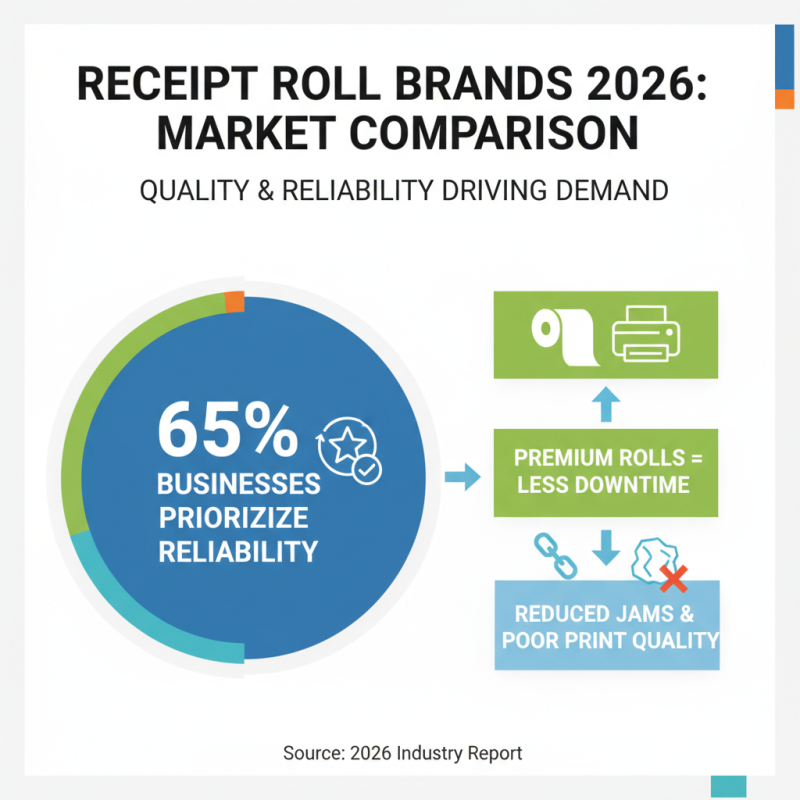
In 2026, the demand for high-quality receipt rolls continues to grow in various industries. A recent industry report indicates that about 65% of businesses prioritize reliability in receipt printing. This emphasizes the importance of using the right materials. Many companies report decreased downtime due to paper jams or poor print quality when they switch to premium rolls.
When comparing popular receipt roll brands this year, the materials used play a critical role. Most businesses rely on thermal paper for its efficiency and clarity. Reports show that proper thermal paper can enhance print quality significantly. Yet, not all rolls are created equal. Some brands suffer from fading or smudging within weeks, affecting customer satisfaction. Industry professionals often recommend testing different suppliers to identify the best fit.
Durability remains a concern. Some receipt rolls deteriorate under various environmental conditions. Exposure to heat and light can lead to issues. In fact, studies suggest around 20% of businesses experience printing errors due to subpar rolls. Investing in quality options can prevent these headaches. Taking the time to choose the right receipt rolls can lead to smoother transactions and higher customer trust.
Cost Analysis: Budgeting for Receipt Rolls in Your Business
Receipt rolls are critical for various businesses, impacting workflows and customer experiences.
An effective budgeting strategy can help optimize expenses. According to industry reports, the average cost of thermal receipt rolls ranges from
$15 to $25 per case, depending on the size and quality. This figure can significantly affect a business's annual spending.
In a typical retail environment, dedicated receipt roll usage may average 1 case per month. This translates to a yearly expense of
$180 to $300.
However, neglecting quality can lead to increased printer maintenance costs when using inferior rolls.
Investing in high-quality receipt paper minimizes reprints and jams, ultimately saving time and money.
Businesses must also consider bulk purchasing options. Reports suggest that ordering in larger quantities can reduce costs by 10-15%.
Still, cautious inventory management is crucial. Overstocks may risk deterioration or wastage.
Tracking usage patterns is essential. This reflects a need for a detailed analysis of both current and future receipt roll requirements to maintain budgetary efficiency.